

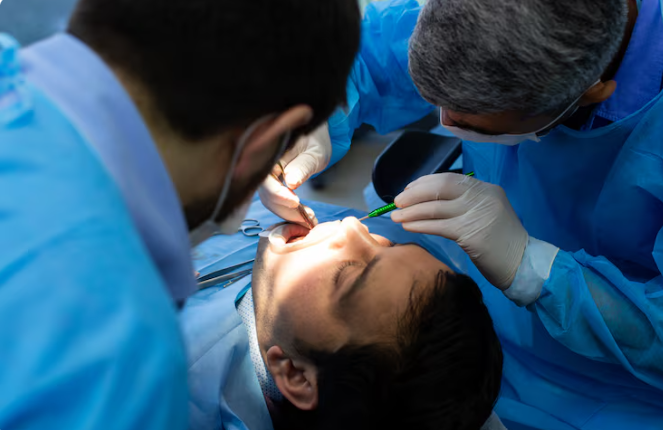
You might be feeling stuck between worry and hope right now. Maybe your orthodontist mentioned “corrective jaw surgery,” and suddenly everything felt heavier. You start googling. You see medical diagrams, long recovery stories, and a lot of unfamiliar terms. It is normal to feel nervous, confused, and even a little overwhelmed, especially if you are looking for an oral surgeon in New Braunfels, TX.
At the same time, there is probably a reason this conversation started in the first place. Maybe your bite has never felt right. Maybe chewing is hard, your jaw clicks, locks, or your face feels out of balance in photos. You might even be dealing with headaches, sleep problems, or chronic jaw pain. Corrective jaw surgery can change those things in a very real way, and the specialist at the center of it all is the oral and maxillofacial surgeon.
In simple terms, here is the big picture. Corrective jaw surgery can improve how you bite, chew, speak, breathe, and look. An oral surgeon is the expert who plans and performs the surgery, works closely with your orthodontist, and guides your recovery. When you understand what they do and why their training matters, the whole process starts to feel less scary and more manageable.
Why does jaw surgery feel so overwhelming in the first place?
Think about how much you use your jaw every day. You use it to eat, talk, yawn, laugh, and even to show emotion. So when someone suggests moving your jaw surgically, it can feel like everything is at stake. You might wonder if you will still look like yourself, if you will be able to eat normally, or if the pain will ever stop.
There is also the practical side. You may worry about time off work or school, how your family will cope, and how you will afford treatment. You might feel guilty about needing something that sounds “major” or worry that people will not understand why you are doing it.
So where does that leave you when you are trying to decide who should actually perform your surgery?
What exactly does an oral surgeon do in corrective jaw surgery?
Corrective jaw surgery, also called orthognathic surgery, is not just about moving bones. It is a carefully planned process that brings your teeth, jaws, muscles, and facial structure into better balance. Oral and maxillofacial surgeons are the specialists who focus on this exact area of the body every day.
According to resources like the Mayo Clinic overview of jaw surgery, these surgeons evaluate how your jaws line up, how your teeth come together, and how your facial structure affects functions like breathing and chewing. They often use 3D imaging, models, and digital planning to map out the surgery before a single cut is made.
Here is what an experienced oral surgeon typically handles in a corrective jaw surgery journey.
They start with a detailed assessment. That includes X-rays, scans, photos, and a physical exam. They talk with you about symptoms like difficulty chewing, speech problems, jaw pain, or sleep apnea. They review what your orthodontist has already done or plans to do.
They then design a surgical plan that fits your unique bone structure. Every face is different. Some people need the upper jaw repositioned, some need the lower jaw adjusted, and some need both. Sometimes the chin is also reshaped to balance the profile.
They perform the surgery in a hospital or surgical center. This involves making precise cuts in the jaw bones, moving them into better positions, and securing them with small plates and screws. These are usually placed inside the mouth so visible scars are minimized.
They guide your healing and coordinate with your orthodontist after surgery. Braces or aligners often continue for a period of time to fine-tune the bite. The surgeon monitors bone healing, nerve recovery, and function.
Because of this level of planning and responsibility, oral surgery for jaw correction is not something to hand off to someone who only occasionally works with jaws. You want someone who understands not just the teeth, but the bones, nerves, muscles, and airway that surround them.
What happens if you try to “simplify” jaw problems without an oral surgeon?
It is very tempting to look for easier-sounding options. You might wonder if you can just use longer orthodontic treatment, or clear aligners, or a night guard, and avoid surgery altogether. Sometimes that is possible. Many bite problems can be fixed with orthodontics alone.
However, when the actual position of the jaws is off, braces cannot move bone. Teeth can be tilted to “meet in the middle” even when the jaws do not line up, but this can sometimes create other issues over time. You might end up with teeth that look straight but still cannot chew well, or a smile that works on the surface but leaves your joints and muscles under constant stress.
This is where a skilled oral surgeon and implant dentist becomes essential. They can see when the foundation, meaning the jaws, needs correction instead of just the teeth. They can also help if you have missing teeth that need dental implants as part of the overall bite correction, so your new jaw position and your tooth replacement plan work together.
Without that deeper structural view, you risk spending years in treatment, only to discover that your core problem is still there.
Comparing your options for jaw problems: what should you weigh?
It helps to see the differences between leaving things as they are, choosing orthodontics alone, and choosing corrective jaw surgery with an oral surgeon. Every person is different, but this simple comparison can give you a starting point to discuss with your care team.
| Approach | What It Involves | Potential Benefits | Common Limitations or Risks |
|---|---|---|---|
| Do nothing / live with current jaw position | No active treatment. Manage symptoms with a soft diet, pain relief, or night guards. | No surgical risk. No treatment cost or time off work in the short term. | Jaw pain, wear on teeth, headaches, or breathing issues may worsen. Appearance and bite usually stay the same. |
| Orthodontics alone | Braces or aligners move teeth within existing jaw position. | Improved alignment and smile. Non-surgical. Lower upfront risk compared with surgery. | Cannot move jaw bones. May not fully correct chewing, profile, or airway issues if jaw size or position is the main problem. |
| Corrective jaw surgery with an oral surgeon | Combined treatment with an oral surgeon and orthodontist. Surgery repositions one or both jaws. Braces usually before and after. | Improved bite function, facial balance, and often breathing. Can address root structural issues. Long term stability when well planned. | Requires anesthesia, recovery time, and higher cost. Temporary swelling, numbness, and diet changes during healing. |
Academic centers, such as the program described by the UCSF orthognathic surgery service, often use this kind of combined approach. They highlight how careful planning and teamwork between orthodontists and oral surgeons can improve both function and appearance.
What practical steps can you take right now?
You do not need to have everything figured out today. You only need to take the next clear step. Here are three actions that can help you move from anxiety to clarity.
1. Get a detailed evaluation from an oral and maxillofacial surgeon
Ask your orthodontist or general dentist for a referral to an experienced oral surgeon who regularly performs jaw correction surgery. During that visit, bring a list of your concerns. Include symptoms like chewing difficulty, speech issues, snoring or sleep apnea, facial pain, or self-consciousness about your profile.
Ask direct questions. What exactly is wrong with the way my jaws line up? What changes do you expect from surgery? What are the risks? How long is the recovery? An expert will welcome these questions and explain things in plain language, not jargon.
2. Ask about the full treatment plan, not just the surgery day
Corrective jaw surgery is a process, not a single event. You deserve to understand how the pieces fit together. Ask how long orthodontic treatment will be before and after surgery. Ask how the oral surgeon and orthodontist will coordinate. Ask how missing teeth or planned implants will be handled so your bite is stable and your smile is complete.
Understanding the full timeline helps you plan work, school, childcare, and finances. It also reduces fear, because you know what to expect at each stage.
3. Weigh quality of life, not just fear of surgery
It is easy to focus only on the scary parts. Anesthesia. Swelling. Time off. Those are real and deserve respect. Yet try to also picture your life two or three years after treatment. Imagine eating without pain, speaking without feeling self-conscious, sleeping without waking up exhausted, or seeing photos of yourself and finally recognizing the person you feel like inside.
Write down what you hope will be different after treatment. Better chewing. Less jaw pain. More confidence. Use that list when you talk with your surgeon about whether orthognathic surgery is the right step for you.
Moving forward with clarity and support
Feeling anxious about jaw surgery does not mean you are weak. It means you understand that this is a big decision that touches how you look, feel, and live. That is exactly why choosing a skilled oral surgeon and implant dentist matters so much. You are not just choosing someone to do an operation. You are choosing a partner in a long process that can change your daily life.
With the right team, clear information, and a plan that respects both your health and your emotions, corrective jaw surgery can move from something you fear to something you feel prepared for. You deserve to have a bite that works, a jaw that does not hurt all the time, and a face that feels like it truly belongs to you.
Your next step is simple. Reach out to a trusted oral and maxillofacial surgeon, ask your hardest questions, and give yourself permission to explore whether this treatment is the right way forward for you.