

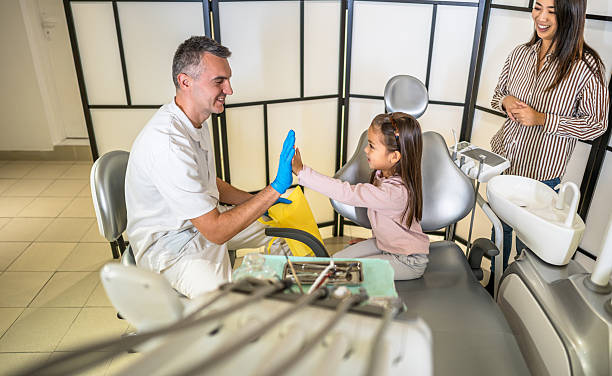
A visit to the dentist can shake a child’s sense of safety. The bright light. The sharp sounds. The strange chair. Your child may feel small and powerless. You may feel helpless watching their fear. A Riverside West dentist sees this every day and knows that confidence does not appear on its own. It grows when a child feels heard, prepared, and in control. This blog shares six clear steps you can use before, during, and after each visit. You will see how simple changes in your words, your timing, and your routines can calm your child’s body and mind. You will also learn how to partner with the dental team so your child feels protected instead of trapped. With steady support, the dental chair can change from a threat into a place of courage and pride.
1. Use honest words that match your child’s age
Your child studies your face and your voice. If your words hide the truth, fear grows. If your words match what will happen, trust grows.
Before the visit, keep your message short.
- Say what will happen in simple steps.
- Use words like “clean,” “count teeth,” and “take pictures.”
- Avoid scary words like “shot,” “drill,” or “hurt.”
Here are sample phrases you can use.
| Instead of saying | Try saying |
|---|---|
| “It will not hurt at all.” | “You might feel some pressure. I will stay right here with you.” |
| “Be brave. Do not cry.” | “It is okay to feel scared. You can squeeze my hand.” |
| “They are going to drill your tooth.” | “The dentist will clean the germ out of your tooth.” |
Honest words keep your child from feeling tricked. That sense of fairness builds confidence.
2. Practice at home through play and routine
Practice gives your child a sense of control. When the visit feels like a repeat of a home game, fear drops.
You can turn practice into short daily habits.
- Play “dentist” with a stuffed toy and a flashlight.
- Take turns being the dentist and the patient.
- Count each other’s teeth in a mirror.
The CDC on children’s oral health explains that regular brushing and checkups protect teeth from decay. You can use that simple fact in your play. Say that the “tooth germs” are lost when the dentist checks teeth.
Next, connect practice to daily care.
- Brush together at the same time each day.
- Let your child choose the toothbrush and song.
- Use a small mirror so your child sees their own teeth.
These small steps teach your child that their mouth is their own. That sense of ownership supports confidence in the chair.
3. Give your child small choices during the visit
Fear grows when a child feels trapped. Choice brings back a sense of power. You cannot change what care is needed. You can change how much control your child feels.
Before you sit down, talk with the dental team about safe choices your child can have.
- Which hand to keep free?
- Which sunglasses to wear?
- Which music or story to hear?
During the visit, offer clear choices that do not affect care.
- “Do you want to sit in the chair by yourself or on my lap at first?”
- “Do you want to hold your toy or the stress ball?”
- “Do you want the chair to go up first or back first?”
Each choice gives a small win. Many small wins add up to real confidence.
4. Use a simple “stop signal” and calm body tools
Your child needs proof that adults will listen when things feel too hard. A clear stop signal shows respect. It also keeps care safe.
Before the visit, agree on one signal.
- Raising a hand.
- Tapping your arm two times.
- Squeezing a small toy.
Explain that the signal means “Please pause.” Then tell the dentist about it right away. This shows your child that the signal has power.
Next, teach one or two calm body tools. Practice them at home.
- Slow belly breathing. Hand on belly. Breathe in through the nose. Breathe out through the mouth.
- Muscle squeeze. Tighten hands and feet for three counts. Then relax.
- Counting game. Count ceiling tiles or pictures on the wall.
When your child uses the signal, and you respond, you show that their voice matters. That experience builds deep trust.
5. Prepare for different types of visits
Not every visit feels the same. A quick check feels different from a filling. When you set clear expectations, fear drops.
You can use this simple guide when you talk with your child.
| Visit type | What usually happens | What you can say |
|---|---|---|
| Checkup and cleaning | Teeth counted. Teeth brushed and polished. Pictures may be taken. | “They will count your teeth and use a special brush to clean them.” |
| X rays | Small pictures taken. The child wears a heavy coat. | “You will wear a heavy blanket while they take quick tooth pictures.” |
| Filling | Germ cleaned out. Tooth filled. | “They will clean the germ and fill the tiny hole so your tooth stays strong.” |
The American Dental Association’s MouthHealthy guide offers more examples of what to expect at children’s visits. You can read it first. Then you can share only what fits your child’s age.
When you explain the visit in this way, you give your child a simple script in their mind. That script replaces scary guesses.
6. Praise effort and build a steady story of courage
What you say after the visit shapes how your child remembers it. Memory can turn a hard moment into a story of strength.
Focus your praise on effort, not on outcome.
- “You kept your mouth open even when you felt scared.”
- “You used your hand signal. That was strong.”
- “You took deep breaths and stayed in the chair.”
If your child cried or refused care, stay calm.
- Say, “That was hard. You still took a step by walking into the room.”
- Plan one small goal for the next visit, such as sitting in the chair for one minute.
- Share that goal with the dental team so they can support it.
Each visit becomes one chapter in a longer story. The story is not about fear. It is about a child who keeps showing up and grows stronger each time.
Putting it all together
You cannot erase every hard moment in the dental chair. You can shape how your child moves through it. Honest words, home practice, real choices, clear signals, good planning, and effort-based praise work together like links in a chain.
When you use these six tips, you teach your child three strong beliefs. “My body is mine.” “Adults listen when I speak up.” “I can do hard things.” Those beliefs stay with your child long after the visit ends.