

Teeth whitening sounds simple. You want a brighter smile. You see ads for quick in office whitening. You also see kits with trays you use at home. Both promise the same thing. Yet they feel very different when you live with them. You face different time demands. You feel different levels of control. You sit with different kinds of worry about tooth pain or sensitivity. A dentist in Carmel, IN may talk about shades and formulas. You care about cost, comfort, and how your mouth feels the next day. You also care how fast you see change. This blog walks through what really happens with each choice. You will see how each method fits into work, family, and your own tolerance for risk. Then you can match your goals to the option that fits your life, not just the one that looks best in a photo.
What Actually Happens In The Chair
In office whitening is a planned medical visit. You sit in a chair. A trained team checks your teeth and gums first. They look for cracks, weak spots, and decay. They protect your lips and gums. Then they place a strong whitening gel on your teeth. Often they use a light to speed up the process.
You usually spend one to two hours in the office. You leave with your final result the same day. The method is fast. It is also supervised. If you feel sharp pain or strong sensitivity, they stop. They rinse the gel. They adjust the plan.
The American Dental Association explains that supervised whitening reduces the risk of damage and uneven color.
What Really Happens At Home With Trays
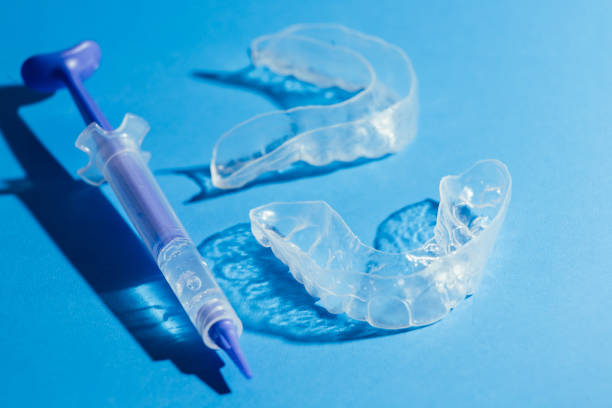
At home trays use a weaker gel. You place the gel in a tray that fits over your teeth. Some trays come from your dentist. Some come from a store. You wear the tray for a set time each day. The process often takes one to two weeks. Sometimes longer.
You manage the steps yourself. You judge the amount of gel. You track the time. You watch for sore spots on your gums. You also must store the trays and gel where kids cannot reach them.
The slow pace can feel gentle. It can also feel tiring. You need steady daily effort. You need to avoid skipping nights. You live with less support if something hurts or looks wrong.
Side By Side Comparison
| Feature | In Office Whitening | At Home Trays |
|---|---|---|
| Who controls treatment | Dental team | You |
| Time to see main change | About 1 visit | 1 to 3 weeks |
| Visit time | 1 to 2 hours per visit | 15 to 60 minutes per day at home |
| Strength of gel | Higher strength | Lower strength |
| Cost per treatment | Higher | Lower |
| Risk of uneven color | Lower with exam and protection | Higher if trays do not fit well |
| Risk of gum irritation | Lower with barriers | Higher if gel leaks |
| Best for | Fast change, one big event | Slow change, ongoing touch ups |
How Each Choice Feels Day To Day
In office whitening hits your schedule once. You plan child care. You take time off work or school. Then it is done. Your main job after that is to avoid dark drinks and smoking for a short time. You may feel tooth sensitivity for a day or two. Cold food can sting. Warm food feels safer.
At home trays weave into daily life. You may need to avoid eating or drinking during wear time. You may talk less while the tray is in. The gel taste may bother you. Some people feel pressure on their teeth. Some feel mild soreness in the jaw from clenching.
Yet at home trays give you control. You can skip a night if your teeth feel sore. You can stop early if you like the shade. You direct the pace.
Safety And Your Family
Both methods are unsafe for young children to use. Hydrogen peroxide and carbamide peroxide can burn soft tissue. The United States Food and Drug Administration shares that tooth whiteners can cause gum irritation and tooth sensitivity. You can review their advice on the FDA tooth whitening page.
At home, trays sit in your bathroom. Curious kids or teens may try them without guidance. That risk matters. You need clear rules. You need safe storage. You also need to explain that white teeth do not measure worth.
In-office whitening keeps the strong gel in trained hands. The risk of a child misusing the product is low. Yet teens may push hard for fast results. You may need to slow down the decision and ask why the change feels urgent.
Cost, Value, and What You Actually Get
In-office whitening often costs more money up front. You pay for the visit, the skill, and the stronger product. You also pay for speed and oversight. For some people, that trade feels fair. They have a wedding or a job event soon. They want one clear step.
At-home trays cost less at one time. Store kits cost even less than dentist trays. Yet you may buy refills over and over. You may chase a shade that your teeth cannot reach. Over time, the total cost can rise.
Value is not just money. It is also comfort and peace of mind. You may accept more cost for less fear. Or you may accept more work at home for a lower cost.
How To Decide What Fits Your Life
Start with three questions. How fast do you need change? How much can you spend right now? How much daily effort can you keep up? Your honest answers will point you toward one method.
- Choose in-office whitening if you want fast change and close support
- Choose at-home trays if you want slow change and strong control
- Combine both if you want a quick start and simple touch ups later
Your smile is personal. You deserve clear facts, not pressure. Talk with a trusted dentist. Ask about your enamel, your past fillings, and your risk for sensitivity. Then choose the path that respects your body, your time, and your budget.