
Many parents who want their kids to pick up Arabic hit the same wall early on: plenty of books, and no obvious place to start. A workbook built for a seven-year-old will frustrate a toddler, while a first-words board book won’t hold a second grader’s attention.
A well-organized collection makes that choice easier. The “learn Arabic for children” range at Noor Art holds 33 products priced from $2.99 to $105.99, and the store says its books combine visual learning, simple vocabulary and guided progression. Below, we sort them by stage, price out a starter shelf, add a storybook routine and share tips for parents who are still learning the language.
Books That Fit Each Stage
Noor Art presents the collection as a path from beginners to more confident young readers. Only The Young Ingenious series carries an age label, so treat the matches below as our editorial picks, judged by each book’s format.
| Stage | Main focus | Good first picks |
|---|---|---|
| Toddlers | First letters, sounds and words, taught with pictures and repetition | Animals Board Book ($5.99), My First Arabic Word ($5.99) |
| Preschoolers | Hands-on practice: coloring, matching, early writing | Playing Group – My Letters ($8.99), I Write and Color Series ($7.99 to $10.99) |
| Early school age | Reading, writing and comprehension, one step at a time | The Young Ingenious (6-7 years, $10.99; 7-8 years, $13.99), My Letters in a Dictionary ($20.99) |
Why board books come first
The store says its toddler titles rely on visual storytelling and simple repetition to teach first letters, sounds and words. Thick cardboard pages cope with grabbing and dropping, and at this age, pointing to a picture while you say its name counts as real progress.
A Starter Shelf at Three Price Points
There’s no need to buy everything at once. These totals use the prices listed when this article was written:
- Under $20: The Arabic Letters Board Book ($6.99), Arabic Words Board Book ($5.99) and the Match with Me: Arabic Fun Letters Coloring Book ($3.99) come to $16.97.
- About $48: add The Sounds of Letters Series ($22.99) and I Write and Color Series: The Objects ($7.99) for a total of $47.95, so sounds and writing practice are covered too.
- A bigger investment: Letters Stories bundles 30 books for $105.99, about $3.53 a book, while the 17-book Sound Recognition Series costs $79.99, roughly $4.71 per book.
Storytime as a Daily Habit
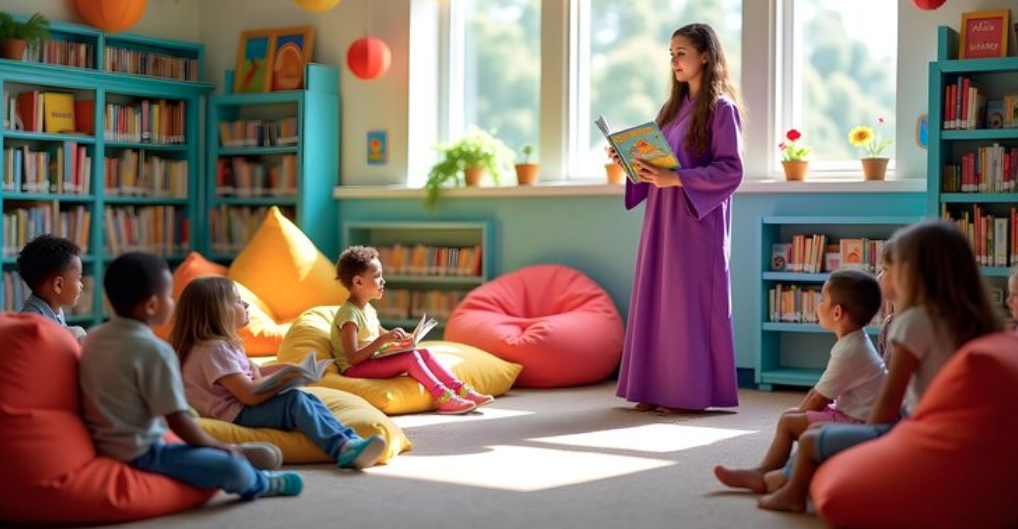
Skill books teach the building blocks, but stories are what make children ask for more. Noor Art curates Arabic stories for home reading with simple language, relatable themes and colorful illustrations. According to the store, the books help with vocabulary, comprehension and imagination, and they’re aimed at families who want a consistent reading routine.
Pick a theme for the moment
| When your child… | Reach for |
|---|---|
| Craves adventure | Classic Tales Stories, which retell traditional adventures with a moral |
| Is learning about kindness or honesty | Behavioral Stories for Children or Manners Stories |
| Asks about faith | A Journey with the Beloved Prophet, covering his life and teachings |
| Is dealing with big emotions | Feelings Stories |
| Is still a baby | Rhyming Baby Books |
Four steps to a lasting routine
- Tie reading to something that already happens daily, like bath time or lights out.
- Start with a picture walk: turn the pages and chat about what you see.
- Read the words, then ask one easy question about what happened.
- Let favorites repeat, and bring in a fresh theme every week or two.
Tips If You’re Learning Arabic Too
You can guide a young reader without being fluent yourself.
- Skim each book on your own first, so unfamiliar words don’t surprise you mid-story.
- Use the letters board book as your own refresher, not just your child’s.
- Know the basics of the script: Arabic reads from right to left, and a letter’s shape usually shifts with its position in a word.
- Follow a story with a related activity, such as an animal tale and I Write and Color Series: The Animals ($7.99).
- If your child studies Arabic at school or in weekend classes, ask which letters they’re on. The collection is designed for classrooms as well as homes.
- Praise every attempt instead of correcting each sound.
In the End
Small, steady choices add up: one book that suits your child’s current stage, one story they’ll beg to hear again, and a few quiet minutes most evenings. If you’re unsure where to begin, the under-$20 shelf above is an easy first step.
Which part of your day could become Arabic story time?
Read more : Artificial Intelligence in Education: Transforming Learning Experiences/5 Benefits Of Early Dental Education Every Parent Should Know