

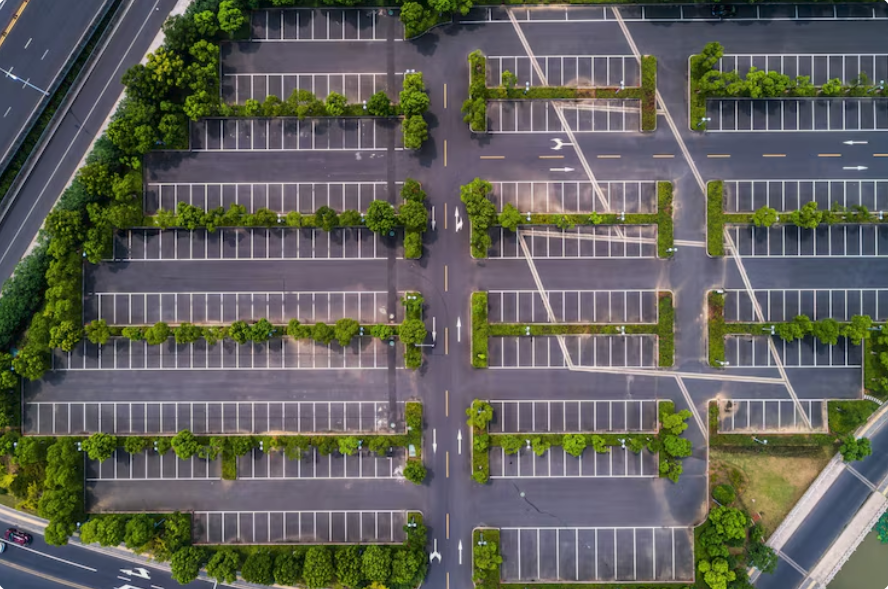
A commercial parking lot supports vehicle movement, pedestrian access, deliveries, and daily business operations. Its condition can influence how easily customers, employees, and vendors enter and move through a property.
Professional parking lot paving involves more than placing a layer of asphalt. A successful project requires site evaluation, drainage planning, base preparation, material placement, compaction, striping, and continued maintenance.
For businesses in the Dallas, Arlington, and Fort Worth area, understanding the paving process can make it easier to select the appropriate service and prepare for the work.
Key Takeaways
- The condition of the pavement and its base determines whether repair, resurfacing, or replacement is appropriate.
- Drainage should be evaluated before asphalt is installed.
- Proper grading, base preparation, asphalt placement, and compaction influence pavement performance.
- Striping, accessible spaces, parking stops, signs, and speed bumps may be incorporated into the project.
- Permit and accessibility requirements vary according to the location and scope of work.
- Routine inspections and timely repairs can help control pavement deterioration.
Why Commercial Parking Lot Condition Matters
A parking lot is often one of the first parts of a commercial property that visitors use. Cracks, potholes, standing water, faded markings, and uneven pavement can make navigation more difficult.
A properly planned parking area can support:
- Organized vehicle movement
- Clearly identified parking spaces
- Safer pedestrian routes
- Easier deliveries
- Defined fire lanes and restricted areas
- Accessible parking
- Better use of available space
- A cleaner property appearance
Paving cannot eliminate every property risk, but it can address surface deterioration and improve the function of the parking area when combined with appropriate drainage, markings, signage, and maintenance.
Repair, Resurfacing, or Replacement?
Not every damaged parking lot needs complete reconstruction. A paving contractor should inspect the surface, base, drainage, and extent of deterioration before recommending a service.
Asphalt Repair
Localized repair may be suitable when damage is limited to certain areas. This can include filling potholes, repairing failed sections, or sealing appropriate cracks.
Repairs may not solve the problem when damage is widespread or caused by base failure. Repeated deterioration in the same area may indicate poor drainage, unstable soil, or another underlying issue.
Asphalt Resurfacing
Resurfacing typically involves placing a new asphalt layer over an existing paved surface. It may be appropriate when the pavement has widespread surface wear but the underlying structure remains reasonably stable.
Before resurfacing, failed areas usually need to be repaired. Drainage problems and unsuitable pavement conditions should also be addressed.
Full Replacement
Replacement may be necessary when the pavement has extensive cracking, widespread base failure, significant settlement, or severe drainage problems. The existing pavement may need to be removed so the contractor can inspect and rebuild the underlying structure.
New Parking Lot Installation
New construction begins with site planning, grading, and base preparation. The design should account for traffic, vehicle types, drainage, accessibility, entrances, exits, pedestrian routes, and local requirements.
The Commercial Paving Process
The exact process depends on the property and project scope, but most parking lot paving projects involve several important stages.
1. Site Evaluation
The contractor begins by assessing the current conditions. For an existing parking lot, this may include examining:
- Cracking patterns
- Potholes
- Drainage
- Settlement
- Surface wear
- Base failure
- Traffic flow
- Existing striping
- Curbs and transitions
For a new lot, the evaluation may include soil conditions, grading, drainage, access points, and the expected types of traffic.
2. Planning and Project Scope
The contractor develops recommendations based on the assessment. The proposal should explain whether the project involves repair, resurfacing, replacement, expansion, or new installation.
It should also identify additional work such as drainage corrections, striping, parking stops, signs, curbs, or speed bumps.
3. Demolition or Surface Preparation
Existing pavement may need to be milled, removed, cleaned, or repaired. The amount of preparation depends on the selected service and the condition of the property.
A clean, properly prepared surface helps the new asphalt bond and perform as intended.
4. Grading and Base Preparation
The base supports the pavement above it. Weak, wet, or poorly compacted base material can lead to settlement, cracking, and potholes.
The contractor may grade the site, remove unsuitable material, install or stabilize the base, and compact it according to project requirements.
5. Drainage Preparation
Water should be directed away from the pavement and toward appropriate drainage points. Poor drainage can allow water to collect on the surface or enter cracks and weaken the underlying materials.
Drainage planning may involve adjusting slopes, correcting low areas, or coordinating with existing drains and site infrastructure.
6. Asphalt Placement and Compaction
Asphalt is placed at the specified thickness and compacted with appropriate equipment. Consistent placement and compaction help create a stable surface.
The required pavement structure depends on expected traffic. A lot used mainly by passenger vehicles may have different requirements from a loading area used by delivery trucks or heavy commercial vehicles.
7. Finishing Features
After the pavement has been installed and is ready for finishing work, the project may include:
- Parking space striping
- Accessible-space markings
- Fire lanes
- Directional arrows
- Crosswalks
- Loading zones
- Parking stops
- Speed bumps
- Curbs
- Signs
These features help organize traffic and communicate how the parking lot should be used.
Planning for Drainage
Drainage deserves attention during every paving project. Standing water can interfere with traffic, create inconvenience, and contribute to pavement deterioration.
A contractor should examine:
- Existing slopes
- Low areas
- Drain locations
- Water movement from nearby buildings
- Downspout discharge
- Adjacent landscaping
- Connections to public drainage systems
Installing new asphalt over a drainage problem may conceal the issue temporarily without correcting its cause. Any proposed drainage work should be clearly included in the project scope.
Accessibility and Local Requirements
Commercial parking lots may need to comply with federal accessibility standards, local building codes, zoning rules, fire codes, and municipal development requirements.
Accessibility considerations can include:
- The required number of accessible spaces
- Van-accessible parking
- Access aisles
- Surface slopes
- Signs and pavement markings
- Accessible routes to building entrances
- Curb ramps
- Changes in level
Requirements depend on the property, location, project type, and applicable regulations. Property owners should confirm which permits and approvals are necessary with the local authority having jurisdiction.
A paving contractor can assist with the physical layout, but property owners may also need guidance from an architect, engineer, accessibility consultant, or local official.
Maintaining a Commercial Parking Lot
New pavement still requires inspection and maintenance. Weather, traffic, drainage, vehicle fluids, and ordinary use gradually affect asphalt.
A maintenance program may include:
Routine Inspections
Walk the property periodically and look for cracks, potholes, settlement, standing water, faded markings, and damaged parking stops.
Crack Treatment
Certain cracks can be cleaned and sealed to reduce water entry. Cracks caused by structural or base failure may require more extensive repairs.
Pothole Repair
Potholes should be evaluated and repaired before they expand or affect surrounding pavement. Recurring potholes may indicate an underlying drainage or base problem.
Sealcoating
Sealcoating may help protect suitable asphalt surfaces against sunlight, water, and oxidation. It does not repair structural failure, deep cracks, or unstable pavement.
The appropriate timing depends on pavement condition, traffic, weather, and product recommendations.
Striping Maintenance
Parking lines and traffic markings should remain visible. Restriping may be needed when markings fade or the parking layout changes.
Drainage Maintenance
Drains, gutters, and water paths should remain clear. Debris or damaged drainage components can cause water to collect on the pavement.
Choosing a Parking Lot Paving Contractor
The paving contractor can affect the quality, scheduling, and overall success of the project. Property owners should evaluate more than the quoted price.
Consider asking:
- How long have you completed commercial paving projects?
- Do you carry appropriate insurance?
- Can you provide references or examples of similar work?
- What preparation is included?
- How will drainage be addressed?
- What asphalt thickness and base work are proposed?
- Is striping included?
- Who handles permits and traffic control?
- How long will the parking lot be unavailable?
- How will access to the business be managed?
- What does the warranty cover?
- How are change orders approved?
The proposal should identify the work, materials, estimated quantities, schedule, payment terms, exclusions, and warranty conditions.
Preparing for Construction
A paving project can temporarily affect parking, deliveries, and building access. Planning ahead can limit disruptions.
Property managers may need to:
- Notify employees, tenants, and customers
- Identify temporary parking
- Adjust delivery schedules
- Coordinate with neighboring properties
- Move parked vehicles
- Restrict access to work zones
- Arrange traffic control
- Confirm emergency access
- Protect newly placed asphalt during curing
For larger properties, phased construction may allow portions of the parking lot to remain available. The contractor should explain how traffic will move during each stage.
Frequently Asked Questions
How long does parking lot paving take?
The schedule depends on lot size, weather, base repairs, drainage work, equipment access, and project scope. The contractor should provide an estimated timeline after evaluating the site.
How long before vehicles can use new asphalt?
Opening time depends on weather, pavement temperature, asphalt thickness, and contractor recommendations. Vehicle access should remain restricted until the contractor confirms that the surface is ready.
Can asphalt be installed over an existing parking lot?
Sometimes. Resurfacing may be appropriate when the underlying pavement remains stable. Severe cracking, drainage problems, or base failure may require additional work.
Does sealcoating fix cracks and potholes?
No. Cracks and potholes should be repaired appropriately before sealcoating. Sealcoating is a protective treatment, not a structural repair.
How often should a parking lot be inspected?
Inspection frequency depends on use and pavement condition. Many property managers inspect after severe weather and during routine property maintenance.
Are accessible parking markings included with paving?
They can be included, but they should be specified in the proposal. The final layout must satisfy applicable accessibility and local requirements.
Final Thoughts
Commercial parking lot paving is a coordinated construction process involving surface evaluation, drainage, base preparation, asphalt installation, compaction, and finishing work. Each step contributes to how the parking area performs.
Businesses should begin with a site assessment and a detailed written proposal. Understanding the recommended service, confirming local requirements, and establishing a maintenance plan can help property owners manage their investment and keep the parking area functional.
Useful Resources
- Elite Asphalt Parking Lot Paving
- Americans with Disabilities Act Standards
- Asphalt Institute
- National Asphalt Pavement Association
- International Code Council
- Texas Department of Transportation
Read More : Protecting Your Landscaping Business: Key Insurance Considerations