

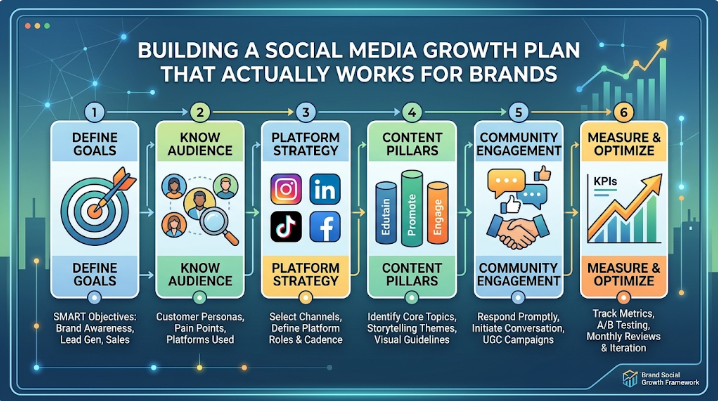
Most brands post on social media and hope for the best. Some days it works, most days it doesn’t, and nobody can really explain why. The truth is that social media marketing isn’t just about publishing nice visuals with clever captions — it’s a scalable, measurable process that strengthens a brand’s presence across platforms like Meta, X, and LinkedIn. If you want consistent results instead of random wins, a solid social media marketing strategy is where everything starts, because it turns scattered posting into a plan you can actually track and improve.
What Social Media Marketing Really Means
At its core, social media marketing is about showing your brand identity on the platforms where your audience already spends time, according to a customized plan. It’s not about being everywhere at once — it’s about being intentional. Every post, comment, and campaign should tie back to a bigger picture: who you’re talking to, what you want them to feel, and what action you want them to take next.
Setting SMART Goals First
Before creating a single post, define what success looks like. Vague goals lead to vague results, which is why marketing officers rely on the SMART framework:
- Specific: Set clear KPIs describing exactly what you want to achieve.
- Measurable: Use numbers to track progress toward those KPIs.
- Attainable: Base your targets on the resources you actually have.
- Relevant: Make sure every goal supports your business vision.
- Time-bound: Attach a clear timeline to each objective.
Common goals include boosting brand awareness to grow your follower base, optimizing website traffic to generate leads and sales, and improving customer engagement to build loyalty and trust through content that genuinely helps people.
Know Your Audience Before You Create Anything
You can’t separate your audience from your business — understanding one means understanding the other. Two things matter most here. First, divide your audience into personas instead of treating them as one giant group; smaller, well-defined segments let you create content that actually speaks to each niche. Second, understand what your audience genuinely needs. Ask yourself honestly: does what I’m offering solve their problem or meet the pleasure they’re chasing? Tools like Google Analytics, surveys, and competitor research can help you gather this information.
Building an Identity and a Content Calendar
Brand identity is how people perceive you — shaped by tone of voice, visual style, fonts, and recurring elements. It doesn’t mean sticking to one color palette; that approach feels outdated. It means having a clear, recognizable spirit across everything you publish.
Once your identity is defined, translate it into a content calendar. When planning it, think about:
- Content types: mix educational, entertaining, and promotional posts.
- Posting frequency: post as often as your resources and audience behavior allow — consistency beats volume.
- Platform adaptation: tailor formats for each platform instead of reposting identical content everywhere.
Get Inspired, Then Track Everything
Looking at what other businesses do — not just direct competitors — can spark ideas worth adapting to your own voice. Inspiration isn’t copying; it’s reworking concepts to fit your identity.
Working with an experienced social media marketing agency can make this whole process faster, since specialists already understand platform behavior, content trends, and how to translate a strategy into daily execution without losing consistency along the way.
None of this matters without measurement. Revisit the SMART goals you set earlier and track metrics such as:
- Reach and impressions, showing how many people see your content.
- Engagement rate, covering likes, comments, shares, and saves.
- Click-through rate, showing how many people visit your site.
- Follower growth, tracking whether your audience expands steadily.
- Conversion rate, showing how interactions turn into leads or sales.
Choosing the Right Platforms
Not every platform fits every brand. LinkedIn suits B2B businesses targeting professionals, Instagram thrives on visual storytelling, X focuses on short conversational updates, and TikTok dominates short-form entertainment. Picking two or three relevant platforms and showing up consistently there will always beat a thin, scattered presence across six.
In the End
A strong social media presence isn’t built overnight — it’s the result of clear goals, real audience understanding, a defined identity, and consistent measurement working together. Most brands see meaningful traction within three to six months of steady effort, so patience paired with data is your best asset. Which part of your current approach needs the most attention right now: your goals, your content, or how you’re tracking results?
Read More: What Are Social Media Tools: Power Moves!
Building a Social Media Growth Plan That Actually Works for Brands
Related posts:
 Why Hiring Professional Packers and Movers Saves You Time and Stress
 How Dispensaries Are Breaking Down the Stigma Around Cannabis Use
 Strategically Aligning IT Initiatives with Business Goals to Drive Growth
 Expert Legal Support for Real Estate Acquisition and Leasing: Why Freeman Lovell is the Choice for Ambitious Businesses
