

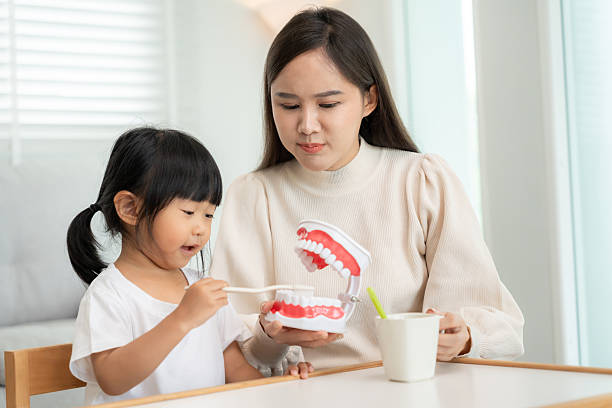
You might be feeling a little torn right now. On one hand, you know your child’s teeth matter and you want to find a trusted dentist in Navarre, FL, yet on the other, life is busy, there are a hundred other priorities, and baby teeth fall out anyway. It is easy to push early dental habits to the bottom of the list and promise yourself you will get serious “when they are older.”
Then something happens. A sudden toothache. A note home from school after a screening. Maybe a dentist gently explaining there is already a cavity. In that moment you see the “after” you were hoping to avoid, and you wonder if you missed your chance to protect your child’s smile.
The good news is that you have more control than it feels like. Teaching children about teeth and oral care early on does not need to be complicated or expensive. When you understand the real benefits of early dental education, you can make small choices now that spare your child pain, save your family money, and create confidence that lasts into adulthood.
Here is the heart of it. When children learn about their teeth early, they tend to get fewer cavities, feel less fear at the dentist, build healthier daily habits, and even do better in school because they are not distracted by preventable pain. Those are the 5 key benefits this will walk through, piece by piece, so you can decide what makes sense for your family.
Why does early dental education matter if baby teeth fall out anyway?
You might hear people say, “They are just baby teeth.” It sounds reasonable, and when money or time feels tight, it can be tempting to ignore small problems and hope they go away. The trouble is that baby teeth are not just placeholders. They affect how your child eats, speaks, smiles, and even how their adult teeth will grow in.
Here is where the tension builds. Cavities in baby teeth can spread, cause real pain, and sometimes lead to infections that affect the rest of the body. Missed school days, lost sleep, and trouble eating can follow. Many parents feel guilty when that happens, even though no one ever sat them down and taught them what to watch for. You are not alone in that.
So where does that leave you? It leaves you with a chance to break that pattern. Early dental education for children is less about perfection and more about giving your child a simple, clear understanding of how to care for their mouth. When you do that, several benefits start to build on each other.
Benefit 1: Fewer cavities and less pain over the years
Imagine two children. One learns by age three that “sugar bugs” live on teeth and that brushing is how you send them away. The other hears only, “Brush your teeth because I said so.” Which child is more likely to brush when no one is watching?
When children understand the “why” in simple language, they are more likely to follow through. That means less plaque, fewer cavities, and less drilling and filling later on. According to resources such as MedlinePlus child dental health guidance, early habits like twice daily brushing with fluoride toothpaste can significantly lower the risk of tooth decay.
Less decay does not just protect teeth. It protects your child’s sleep, their ability to enjoy food, and their mood. A child who is not in constant low-grade pain is simply more themselves.
Benefit 2: Lower dental costs and fewer emergency visits
Unplanned dental visits are stressful. They usually happen at the worst time. A weekend, a holiday, right before a trip. Emergency care and major treatments can be costly, and insurance does not always cover everything.
Early dental education changes that pattern. When your child learns to spot when something feels “not right” in their mouth and is used to regular checkups with a family dentist, small problems get caught early. A tiny cavity is far less expensive to treat than a tooth that needs a crown or extraction.
Over childhood and the teen years, those differences add up. Money not spent on preventable treatment can stay in your family’s budget for other needs, and you spend less time in dental chairs and more time living your life.
Benefit 3: Less fear and anxiety at the dentist
Maybe you grew up dreading the dentist. The smell, the sounds, the anxiety of not knowing what would happen. Many adults carry that fear into parenthood and hope their children will somehow feel different, yet kids pick up on that tension very quickly.
So how does early dental education help here? When children are taught what to expect, in gentle and concrete terms, the mystery fades. Regular early visits focused more on “counting teeth” and showing tools than on treatment help the child see the dental office as a normal part of life, not a punishment.
When a child knows what a cleaning is, why X rays are taken, and that it is okay to raise a hand if they need a break, they feel some control. That sense of control is often what separates a calm visit from a traumatic one.
Benefit 4: Stronger lifelong habits and healthier adult smiles
Habits learned early tend to stick. A child who brushes and flosses because it is “just what we do” at home is far more likely to carry that into the teenage years and beyond.
Those daily choices affect the adult they will become. Fewer cavities, healthier gums, and less risk of gum disease in middle age are all connected to the routines built in childhood. When you invest time in early dental education, you are not only caring for your child today. You are giving your future adult child a better chance at keeping their natural teeth for life.
Benefit 5: Better focus, confidence, and school performance
Tooth pain can be invisible to others, yet it drains a child’s energy. A child who cannot chew comfortably may avoid certain foods, which can affect nutrition. A child who is embarrassed to smile or speak because of visible decay or missing teeth might withdraw socially.
Over time, that can affect how they show up in class, how they read aloud, and how they participate with friends. When teeth are healthy and pain free, children often feel more confident raising their hand, laughing, and speaking clearly. Good oral health is not only about a nice smile. It supports learning, social growth, and self esteem.
Resources like the National Institute of Dental and Craniofacial Research materials for children offer simple stories and activities that can help you support that growth at home.
How do early habits compare to “waiting and seeing”?
You might still be wondering whether early dental education is truly worth the effort, especially when everyone is tired at the end of the day. It can help to see the tradeoffs side by side.
| Approach | Short term impact | Long term impact | Typical costs over time |
|---|---|---|---|
| Teach and support early dental habits | A few extra minutes each morning and night, plus calm, regular checkups | Fewer cavities, less fear, stronger habits, healthier adult teeth | Regular preventive visits and occasional small treatments |
| “Wait and see” with minimal education | Less effort now, but more uncertainty and missed early signs | Higher risk of pain, emergencies, and anxiety about the dentist | More emergency visits and complex treatments that cost more |
Looking at these paths, you can see that the “easy” choice today often becomes the harder one later. The good news is that you can shift from one path to the other at any time. Even small changes in how you talk about teeth at home can start to move your child toward better outcomes.
What can you do right now to protect your child’s smile?
You do not need special training or fancy tools to start. You just need a clear, simple plan and a bit of consistency.
1. Make brushing a shared, predictable routine
Children copy what they see. Instead of sending your child to the bathroom alone, stand beside them and brush together. Use a soft brush, a pea sized amount of fluoride toothpaste once they are old enough not to swallow it, and aim for two minutes. You can use a song or a short timer so it feels like a game instead of a chore.
Keep the message simple. “We brush in the morning to wake our teeth up, and at night to clean off the sugar bugs.” Over time, that story becomes part of how your child understands their body.
2. Choose small, realistic food and drink changes
You do not have to overhaul your whole pantry. Even one or two changes can help. Offer water instead of juice between meals. Save sweets for mealtimes instead of constant grazing. Explain in simple terms that sticky or sugary snacks “feed the sugar bugs” and that water helps rinse them away.
If you feel pressure around food or use treats to comfort your child, be gentle with yourself. You are allowed to take this one step at a time. Each small change still supports your child’s teeth.
3. Build a calm relationship with a family dental care provider
Regular checkups matter more when they start early. Look for a dentist who is comfortable with children and is willing to explain what they are doing in child friendly language. Schedule visits before there is a problem so your child can meet the team when they are not already in pain.
Before each visit, talk through what will happen. “The dentist will count your teeth, use a small mirror, and clean them.” After the visit, praise your child for what they did well, whether it was opening wide or asking a question. Over time, the dentist’s office becomes a normal part of their health routine instead of a scary unknown.
Moving forward with confidence about your child’s oral health
You might still feel a bit of regret about what you did not know earlier. That is a natural reaction for a caring parent. It is also not the end of the story. Every brushing, every calm visit, every simple conversation about teeth is another step toward a healthier, more confident child.
Early dental education is not about being perfect or never missing a night of brushing. It is about giving your child tools, language, and experiences that make caring for their mouth feel normal and doable. When you do that, you protect them from avoidable pain, you ease your own stress about surprise dental problems, and you help them grow into an adult who sees their smile as a source of strength instead of worry.
You do not have to change everything at once. Choose one small step from today, start there, and build as you go. Your child’s future smile will thank you for the care you are offering right now.