

In the evolving digital landscape, organizations are rapidly moving workloads and operations to the cloud to enhance flexibility and drive productivity. While this shift delivers unprecedented scalability, it also introduces a host of security complexities. Understanding what is SASE meaning in cybersecurity is increasingly essential, as businesses work to protect sensitive data and maintain the trust of customers and partners.
Cloud infrastructure often involves numerous providers and hybrid arrangements, each with different security settings, APIs, and management protocols. This complexity creates opportunities for misconfigurations that can lead to breaches or data loss. To keep up with threats, businesses require comprehensive, robust security solutions that can adapt to the changing nature of cloud environments. Strong security protocols underpin efforts to minimize vulnerabilities and maximize protection, making them foundational to any cloud strategy.
Understanding the Cloud Security Landscape
Cloud security is defined by its inherent complexity. Today’s typical organization might use several cloud services from different vendors, each with its unique security requirements and controls. This diversity can result in inconsistent application of security policies, increasing the risk of exploitable vulnerabilities. For example, many high-profile data breaches have resulted from misconfigured storage services, underscoring the need for organizations to maintain meticulous oversight of cloud security settings.
Integrating existing on-premises security standards with those of cloud platforms can be challenging even for seasoned IT teams. It is vital to consider key security pillars, including identity management, network segmentation, data encryption, access control, and ongoing monitoring. Staying up to date on these rapidly evolving cloud security best practices is critical for every organization that depends on the cloud.
Implementing Zero Trust Architecture
Zero Trust Architecture (ZTA) has emerged as a leading security model for cloud environments. Unlike legacy security approaches, which often assume that users and devices within the network are automatically trusted, Zero Trust dictates that no entity should be trusted by default. Every attempt to access a resource must be verified and authenticated, whether it originates from inside or outside the organizational perimeter.
Implementing Zero Trust involves continuous, context-aware authentication and rigorous access control mechanisms. Organizations must regularly audit and restrict access privileges, monitor usage patterns, and require multiple authentication factors to minimize the risk of compromise. Zero Trust not only helps prevent unauthorized access but also limits lateral movement in the event of a breach, thereby offering a more resilient posture against modern cyber threats.
Leveraging Quantum-Safe Cryptography
The rise of quantum computing presents significant implications for contemporary encryption algorithms. With the computational power of quantum machines, past and current encryption standards like RSA and ECC could become easily breakable, putting vast amounts of sensitive data at risk. To stay ahead, researchers are developing quantum-resistant cryptography designed to withstand quantum-enabled attacks. This includes innovative single-shot protocols for machine-to-machine authentication in IoT and cloud ecosystems, ensuring security even in a quantum future. For more on these emerging cryptographic protocols, see Forbes’s overview on post-quantum cryptography.
Enhancing Data Protection with Advanced Encryption
Encryption remains at the forefront of protecting data, both in motion and at rest, across cloud platforms. The Transport Layer Security (TLS) protocol, a standard for securing network communications, encrypts data to ensure privacy and integrity between applications. By establishing secure connections between users, servers, and cloud services, TLS helps prevent eavesdropping, tampering, and man-in-the-middle attacks that could compromise sensitive information.
With pervasive encryption, it becomes substantially more difficult for attackers to intercept or manipulate sensitive information, a critical defense for today’s cloud-first enterprises. Many organizations also combine TLS with additional encryption standards, such as AES for stored data, to strengthen overall protection. Implementing strong key management practices and regularly updating cryptographic protocols further enhances security. As cyber threats continue to evolve, consistent encryption strategies help safeguard confidential data, support regulatory compliance, and maintain trust between organizations, customers, and partners operating in digital environments.
Integrating AI-Driven Security Measures
Artificial Intelligence (AI) is transforming how organizations secure their cloud environments. AI-driven tools process vast volumes of security data in real time, detecting anomalies, unusual patterns, and threat signatures far faster and more accurately than conventional methods. By analyzing network behavior, login patterns, and system activities, these systems can quickly identify potential risks that might otherwise go unnoticed. These technologies automate incident detection, investigation, and response, thereby shortening containment time and enhancing overall security effectiveness. For example, AI-powered security platforms can automatically isolate compromised accounts, block suspicious traffic, or trigger alerts for security teams to review. Over time, machine learning models also improve their accuracy by learning from previous threats and security incidents. Mature AI systems are now central to efforts to proactively stop cyberattacks, strengthen threat intelligence, and support continuous compliance in dynamic, cloud-based environments where threats evolve rapidly.
Adopting Multi-Layered Security Frameworks
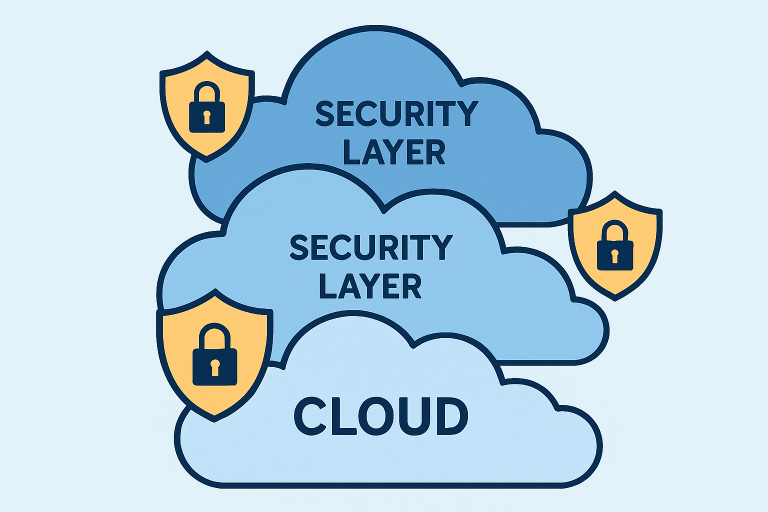
Adopting a multi-layered security framework is pivotal for a holistic cloud defense. By layering several defensive mechanisms, such as network segmentation, endpoint protection, robust encryption, identity and access management, and continuous monitoring, organizations make it more difficult for attackers to penetrate systems and perpetrate damage. Recent research supports multi-layered approaches that blend lightweight encryption for resource-constrained devices, such as in IoT-cloud integrations, with enterprise-grade security principles, fortifying defenses across all vectors and endpoints.
Ensuring Compliance with Regulatory Standards
With increasing regulatory scrutiny of data privacy and cybersecurity, organizations must align their cloud security protocols with legal standards such as GDPR, HIPAA, and PCI DSS. Compliance is more than avoiding penalties; it builds customer trust and reinforces an organization’s commitment to security. Essential steps include conducting frequent risk assessments, delivering regular employee training, and maintaining detailed audit logs. Updating compliance programs to match the evolving regulatory landscape is essential for sustainable operations in today’s cloud-centric world.
Conclusion
The adoption of cloud computing is reshaping the business world, presenting new opportunities and new risks. By leveraging comprehensive modern security protocols, ranging from Zero Trust and quantum-safe cryptography to AI-enabled defenses and layered security frameworks, organizations can safeguard their digital assets while ensuring regulatory compliance. Building and maintaining this resilient cloud security posture is indispensable for driving growth, fostering trust, and achieving long-term success in the interconnected age.