

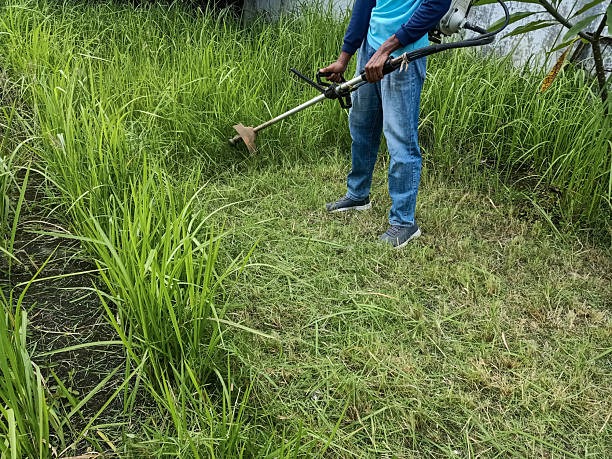
Grass does not grow at a constant rate, so a trimming routine that works in early spring can become inefficient by midsummer. Temperature, rainfall, irrigation, grass variety, mowing height, and soil conditions all influence how quickly turf produces new growth. As the season progresses, those changes also affect how often homeowners need to reach for grass trimmers.
After years of maintaining residential lawns, one pattern becomes clear: trimming is easier when it follows the growth cycle rather than a fixed calendar. The edges of a lawn often reveal this first. Grass along fences, walkways, trees, and landscaping beds can grow differently from the main turf, creating taller patches that require more frequent attention.
Understanding those changes can make trimming faster, reduce unnecessary cutting, and produce a more consistent finish throughout the growing season.
Why Grass Height Changes the Way You Should Approach Trimming
Grass height affects more than appearance. It influences how much material a trimmer removes with each pass and how easily the cutting line can maintain a consistent height.
Short, regularly maintained grass usually requires light finishing work. Taller vegetation demands slower movement and more controlled cutting.
This is particularly noticeable around lawn boundaries. A homeowner may mow the central lawn regularly but discover that grass along a fence has grown several inches taller because the mower deck cannot reach it effectively.
The solution is not necessarily trimming more aggressively. It is adjusting the technique to match the growth stage and vegetation height.
Spring Growth Often Requires More Frequent Edge Checks
Spring is when many lawns transition from relatively slow growth to active development. Soil moisture is often more consistent, temperatures begin rising, and turf can respond quickly.
During this period, homeowners sometimes make the mistake of waiting until grass looks obviously overgrown before trimming.
A better approach is to inspect the edges whenever the main lawn is mowed. Fence lines, tree rings, garden borders, and sidewalk edges may need attention even when the overall lawn still looks manageable.
Watch for uneven growth after winter
Winter can leave grass flattened, damaged, or uneven. As new growth emerges, certain areas may recover much faster than others.
Do not automatically cut every area to the same height. First determine whether the growth is healthy turf, weeds, or damaged vegetation recovering from seasonal stress.
Early Summer Is When Trimming Frequency Often Increases
For many warm-season lawns, early summer brings rapid growth. Adequate moisture and longer periods of sunlight can make grass noticeably more vigorous.
This is when a weekly mowing routine may still leave perimeter areas needing additional attention between full lawn cuts.
A practical strategy is to establish a quick trimming inspection after each mowing session.
Check:
- Fence bases
- Driveway edges
- Sidewalk boundaries
- Tree trunks
- Mailbox posts
- Raised beds
- Areas beneath shrubs
- Narrow strips between structures
If these areas remain short and visually consistent, there is no reason to trim them simply because the calendar says it is time.
Midseason Growth Changes the Amount of Material a Trimmer Handles
By midsummer, the difference between maintained turf and inaccessible grass can become substantial.
Consider a lawn where the main grass is maintained around 3 inches high while a narrow fence-line strip has reached 6 or 7 inches. A trimmer now has to remove twice as much vertical growth from that strip.
That changes the technique.
Taller grass requires controlled passes
Instead of trying to cut all the material in one deep sweep, make controlled passes. Start higher if necessary, then work down toward the desired finish.
This reduces the likelihood of bogging down the cutting head, wrapping vegetation around the tool, or producing an uneven edge.
It also gives the operator better control over how much vegetation is removed.
Drought and Heat Can Change the Best Trimming Strategy
Summer growth is not always vigorous. Extended heat and drought can slow turf growth dramatically.
During stressful conditions, aggressive trimming can create unnecessary damage, especially around exposed edges where soil temperatures can be higher and moisture loss can occur more quickly.
The U.S. Department of Agriculture provides extensive information through its National Agricultural Library on turf, plants, soil, and water-management research.
The practical lesson is to distinguish between fast-growing grass and stressed grass. A lawn that has stopped growing because of environmental conditions does not necessarily need the same trimming schedule it required several weeks earlier.
Late Summer Can Produce Uneven Growth After Rain or Irrigation Changes
A dry spell followed by substantial rainfall can produce a noticeable growth surge. Areas that received sufficient moisture may suddenly become taller, while shaded or compacted sections remain comparatively slow.
This can create irregular trimming patterns across the same property.
Instead of treating the entire lawn perimeter as one uniform zone, divide it mentally into sections:
- High-growth areas
- Normal-growth areas
- Low-growth or stressed areas
- Areas requiring only occasional cleanup
This makes the trimming routine more targeted.
Fall Growth Requires a Different Kind of Attention
As temperatures decline and daylight decreases, turf growth generally slows. The frequency of trimming may decrease as well.
However, fall creates another issue: leaves and organic debris can obscure the lawn edge.
Grass growing along fences, walls, and landscaping beds may be difficult to see beneath fallen leaves. Clear the area before trimming so the cutting line is not striking hidden debris.
This is especially important around ornamental beds where sticks, stones, landscape edging, and irrigation components may be concealed.
How to Adjust Trimming Technique to Grass Height
The same trimmer can produce very different results depending on how it is used.
For short grass, a light and consistent side-to-side motion is usually sufficient. The goal is to maintain the existing height rather than remove substantial material.
For taller growth:
- Slow the cutting movement.
- Avoid burying the cutting head into dense vegetation.
- Work in stages when necessary.
- Keep the tool under control rather than swinging excessively.
- Inspect the finished area before making another pass.
Avoid scalping the lawn edge
Scalping happens when too much vegetation is removed and the cutting head is held too low.
It is particularly easy to do along sidewalks and driveways because the hard surface provides a visual reference. However, repeatedly cutting turf extremely short can leave the edge thin or stressed.
The objective is a clean transition, not the shortest possible grass.
Trimming Versus Edging: Choosing the Right Approach for the Season
Trimming and edging serve related but different purposes.
Trimming removes grass from areas the mower cannot reach.
Edging establishes a defined boundary between turf and another surface.
A property may need more trimming during periods of rapid growth, while edging may be needed less frequently if a clean physical boundary has already been established.
For example, a fence line may require regular trimming throughout summer, whereas a concrete sidewalk may only need occasional edging to restore a crisp boundary.
Common Mistakes That Make Seasonal Trimming Harder
Several habits create unnecessary work.
Waiting until grass becomes severely overgrown
Once perimeter grass becomes tall and dense, trimming takes longer and requires more material removal. Regular inspections make the job easier.
Using the same cutting height all year
Growth conditions change. A rigid trimming schedule can encourage unnecessary cutting during slow-growth periods or leave edges neglected during rapid growth.
Cutting too much at once
Heavy vegetation is often easier to manage through controlled passes rather than one aggressive cut.
Ignoring weather conditions
Wet grass can behave differently from dry vegetation and may create messy clippings or clogging. Extremely dry conditions can also increase dust and debris.
Trimming without checking for obstacles
Fence lines and landscaping edges can conceal rocks, wire, irrigation components, and other objects. A quick inspection can prevent avoidable damage.
A Practical Seasonal Trimming Routine for Homeowners
A useful approach is to let the lawn itself determine the schedule.
After each mowing session, walk the perimeter and ask:
- Is the grass visibly taller than the main lawn?
- Has it begun covering a walkway or driveway?
- Is it interfering with landscaping?
- Is the vegetation healthy and actively growing?
- Does the area actually need cutting?
If several answers are yes, trim the affected section.
This takes only a few minutes but prevents the common cycle of allowing grass to become severely overgrown and then attempting to remove it all at once.
Why Consistent Trimming Produces a Better-Looking Lawn
The visual difference between a routinely maintained lawn and an occasionally trimmed lawn is often most noticeable at the boundaries.
A consistent edge creates separation between turf and structures. It makes sidewalks look cleaner, emphasizes landscape beds, and prevents grass from visually spilling into areas where it does not belong.
More importantly, regular light maintenance is generally easier than periodic heavy correction.
That is the central lesson of seasonal trimming: the goal is not to cut as often as possible; it is to remove only enough growth to keep each area within a manageable range.
FAQ About Grass Height and Seasonal Trimming
How often should grass edges be trimmed?
There is no universal schedule. During periods of rapid growth, edges may need attention weekly or more often. During slow-growth periods, trimming may be necessary much less frequently.
Should tall grass be cut all at once?
Not always. Very tall vegetation is often easier to manage through controlled passes, particularly when there is a large difference between the existing height and the desired finish.
Can trimming too short damage grass?
Yes. Repeatedly cutting grass extremely low can stress turf, particularly during heat or drought. Maintain a reasonable height appropriate for the grass type and growing conditions.
Should I trim before or after mowing?
For most lawns, mowing first and trimming afterward is an efficient sequence. The mower handles broad areas while the trimmer finishes locations the deck could not reach.
Does rainfall affect trimming frequency?
Yes. Adequate moisture can accelerate growth, while prolonged drought or heat can slow it. Adjust the schedule based on actual growth rather than relying solely on a fixed calendar.
Let Grass Growth Set the Trimming Rhythm
Seasonal lawn care becomes easier when grass height is treated as a changing condition rather than a fixed number.
Spring may call for closer inspections as growth accelerates. Summer can bring rapid perimeter growth, followed by slower or uneven development during heat and drought. Fall generally reduces growth but introduces leaves and debris that can hide the lawn’s edges.
Throughout those changes, the best trimming strategy remains consistent: inspect first, identify where growth is actually exceeding the desired height, and match the cutting technique to the amount of vegetation present.
That approach saves time and produces a more deliberate finish. Instead of trimming simply because it is a particular day of the week, you are responding to what the lawn is telling you which is usually a better guide to efficient maintenance.