

Finding a place to park has become a daily challenge in many urban areas. As cities grow denser and vehicle ownership continues to rise, the pressure on available parking spaces increases. What was once a simple matter of finding an open spot has evolved into a complex issue involving land use, traffic flow, and urban planning.
Car parking solutions have moved far beyond traditional surface lots. Today, they combine design, technology, and strategy to make better use of limited space while improving the overall experience for drivers. Whether for residential buildings, commercial centers, or public infrastructure, the right approach to parking can ease congestion, save time, and even enhance property value.
This article explores how modern car parking solutions work, why they matter, and the practical options available for different settings.
Why Parking Has Become a Critical Urban Issue
Parking is often overlooked until it becomes a problem. In many cities, it is one of the main sources of frustration for drivers, and it also contributes to traffic congestion.
The Hidden Impact of Poor Parking
When drivers circle blocks searching for available spaces, traffic builds up. This not only wastes time but also increases fuel consumption and emissions. In busy areas, poorly managed parking can disrupt local businesses, as customers may avoid locations where parking feels difficult or unpredictable.
Space is another key factor. Land in urban areas is limited and expensive. Allocating large surface areas for parking is not always practical, especially when that land could be used for housing, offices, or public spaces.
The Shift Toward Smarter Planning
Urban planners and developers are now treating parking as part of a broader system. Instead of simply adding more spaces, the focus has shifted toward using existing space more efficiently.
Car parking solutions today are designed to balance convenience, cost, and sustainability. This often means combining physical infrastructure with digital tools and better planning strategies.
Types of Car Parking Solutions
There is no single approach that works for every location. Different environments require different solutions, depending on available space, budget, and demand.
Surface Parking
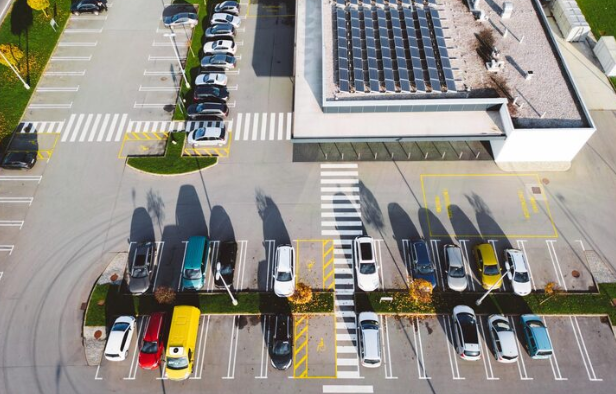
Surface lots remain the simplest form of parking. They are relatively easy to build and maintain, making them common in suburban areas and large commercial sites.
However, they require significant land area. In dense cities, this makes them less practical. Surface parking is often seen as a temporary or supplementary solution rather than a long-term strategy.
Multi-Level Parking Structures
Multi-level parking garages are one of the most widely used car parking solutions in urban settings, much like the demand for used cars in tucson, as they maximize the number of vehicles that can be accommodated on a limited footprint.
These structures can be open-air or enclosed and are commonly found in shopping centers, office complexes, and public transit hubs. While they require higher upfront investment, they provide a more efficient use of space compared to surface lots.
Underground Parking
In areas where preserving above-ground space is important, underground parking is often used. This approach is common in residential developments and high-end commercial properties.
Underground parking keeps the surface available for landscaping, pedestrian areas, or additional buildings. However, it involves higher construction costs and more complex engineering, particularly in areas with challenging soil or water conditions.
Automated Parking Systems
Automated systems represent a more advanced category of car parking solutions. These systems use mechanical lifts and platforms to store vehicles in compact spaces without the need for drivers to navigate the structure.
Drivers typically leave their vehicles at a designated entry point, and the system parks the car automatically. This reduces the need for ramps, wide lanes, and large turning areas, allowing for a more compact design.
Automated systems are especially useful in locations where space is extremely limited or where maximizing capacity is a priority.
Technology-Driven Parking Innovations
Technology has become a key part of modern parking systems. It helps improve efficiency, reduce frustration, and provide better data for operators.
Smart Parking Sensors
Sensors can be installed in parking spaces to detect whether a spot is occupied. This information can be shared with drivers through mobile apps or digital displays, guiding them directly to available spaces.
By reducing the time spent searching for parking, these systems help lower congestion and improve traffic flow.
Mobile Payment and Reservation Systems
Digital payment options have replaced traditional cash-based systems in many areas. Drivers can now pay for parking through mobile apps, often with the ability to extend time remotely.
Some platforms also allow users to reserve spaces in advance. This is particularly useful in high-demand locations, where availability can be unpredictable.
Data and Analytics
Modern car parking solutions often include data tracking capabilities. Operators can analyze usage patterns, peak hours, and occupancy rates to make better decisions.
This data can inform pricing strategies, staffing needs, and future development plans. It also helps identify underused areas that could be optimized.
Designing Parking for Better User Experience
A well-designed parking facility does more than provide space. It makes the process simple and intuitive for users.
Clear Layout and Signage
Drivers should be able to navigate a parking facility without confusion. Clear signage, logical traffic flow, and visible markings all contribute to a smoother experience.
Poorly designed layouts can lead to bottlenecks, accidents, and frustration. Even small improvements in design can make a noticeable difference.
Lighting and Safety
Lighting plays an important role in both visibility and safety. Well-lit areas help drivers park more easily and make users feel more secure, especially at night.
Security measures such as cameras and controlled access points also contribute to a safer environment.
Accessibility
Inclusive design is an essential part of modern parking. This includes designated spaces for people with disabilities, as well as features that make facilities easier to use for everyone.
Accessible parking should be located close to entrances and designed with sufficient space for mobility needs.
Sustainable Approaches to Parking
As cities focus more on sustainability, parking solutions are evolving to support environmental goals.
Reducing Land Use
Compact parking designs, such as multi-level and automated systems, reduce the amount of land required. This allows more space for green areas, buildings, or public amenities.
Supporting Electric Vehicles
Electric vehicle adoption is growing, and parking facilities are adapting by adding charging stations. Integrating charging infrastructure into parking areas makes it more convenient for drivers to transition to electric vehicles.
Encouraging Alternative Transport
Some developments are rethinking the role of parking altogether. By improving access to public transportation, cycling, and walking, they reduce the need for large parking areas.
In these cases, car parking solutions are part of a broader mobility strategy rather than a standalone feature.
Choosing the Right Parking Solution
Selecting the best approach depends on several factors. There is no one-size-fits-all answer, and each project requires careful evaluation.
Assessing Demand
Understanding how many spaces are needed is the first step. This involves analyzing current usage and anticipating future growth.
Overbuilding can waste resources, while underbuilding can create ongoing challenges.
Evaluating Space Constraints
Available land and site conditions play a major role in determining which solutions are feasible. In tight urban spaces, vertical or automated systems may be more practical.
In larger areas, simpler solutions like surface parking may still be effective.
Balancing Cost and Value
Budget considerations are always important. While advanced systems offer efficiency, they also come with higher upfront costs.
The key is to balance initial investment with long-term benefits, including operational savings and improved user experience.
The Future of Car Parking Solutions
Parking is likely to continue evolving alongside changes in transportation. As technology advances and urban priorities shift, new approaches will emerge.
Autonomous vehicles, for example, could change how parking facilities are designed. Cars that can park themselves may require less space and different layouts.
Shared mobility services may also reduce the overall demand for parking in some areas. This could lead to more flexible use of space, where parking structures are designed to adapt to different functions over time.
At the same time, the need for efficient and reliable parking will not disappear. People will still require convenient access to destinations, and well-designed parking systems will remain part of that equation.
Final Thoughts
Car parking solutions are no longer just about fitting as many vehicles as possible into a given space. They are about creating systems that work efficiently, support urban development, and provide a better experience for users.
From traditional surface lots to advanced automated systems, each solution has its place. The challenge lies in choosing the right combination for each setting.
As cities grow and technology continues to evolve, thoughtful parking design will play an important role in shaping how people move and interact with their environment. A well-planned parking system may not always be noticed, but its impact is felt every day in smoother traffic, easier access, and a more organized urban space.