

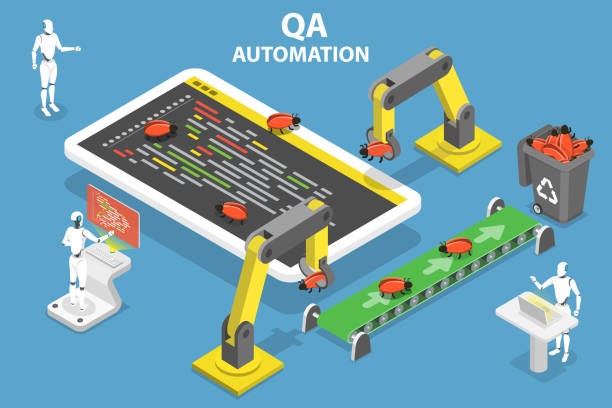
Software testing faces unprecedented challenges in 2025. Development cycles compress from months to days. Codebases explode in complexity. Release frequencies accelerate beyond human validation capacity. Traditional QA methodologies, manual test case writing, script-based automation, and reactive bug hunting buckle under these pressures.
Teams spend more time maintaining brittle test suites than building new features. Flaky tests erode confidence. Coverage gaps multiply across microservices architectures. The fundamental problem isn’t tools or effort; it’s that human-dependent testing cannot scale at the speed modern software demands.
This reality drives a transformative solution: autonomous QA agents that don’t just execute tests but independently manage entire quality assurance pipelines.
AI QA agents mark a decisive evolution from automation to intelligence. These systems leverage natural language processing, machine learning, and behavioral analytics to plan testing strategies, generate test scenarios, execute validations, diagnose failures, and repair broken tests, all with minimal human intervention. They integrate directly into CI/CD pipelines, making real-time decisions about risk prioritization, resource allocation, and defect severity.
Unlike conventional automation that follows rigid scripts, the AI QA Agent adapts to code changes, learns from production patterns, and optimizes coverage based on actual usage data. Organizations implementing this system report dramatic reductions in testing overhead, faster release cycles, and significantly higher defect detection rates.
This shift represents more than technological advancement, it’s a strategic reimagining of quality assurance as an intelligent, self-improving discipline rather than a manual bottleneck.
Menu list
What Are Autonomous QA Agents?
Autonomous QA agents are AI-powered systems that independently orchestrate testing activities across the entire software delivery lifecycle.
They differ fundamentally from traditional automation.
Classic automation: executes predefined scripts, requires constant human maintenance, breaks when UI elements change, follows rigid execution paths.
Autonomous agents: reason about testing objectives, adapt to application changes, self-heal when tests break, generate new scenarios based on code analysis.
Key differentiators include:
- Self-learning capabilities through machine learning models
- Natural language understanding for requirement interpretation
- Contextual awareness across codebases and environments
- Proactive decision-making without human triggers
- Continuous optimization based on historical outcomes
These agents operate as intelligent collaborators.
They analyze pull requests to determine risk areas.
Generate targeted test scenarios for modified code sections.
Execute validations across parallel environments.
Diagnose root causes when failures occur.
Update test logic automatically when applications evolve.
The paradigm shift matters.
Traditional QA treats testing as a separate phase.
Autonomous agents embed quality enforcement throughout development.
They transform testing from reactive validation to predictive risk management.
Core Capabilities of AI QA Agents
AI-Orchestrated Test Generation & Maintenance
Natural language processing transforms requirements into executable tests.
Product managers write user stories in plain English.
Agents parse intentions, identify validation points, generate comprehensive test scenarios covering happy paths and edge cases.
No manual scripting required.
Machine learning models analyze application behavior patterns.
Agents study user flows, API call sequences, data transformations.
Identify critical business paths requiring validation.
Generate tests for scenarios humans might overlook.
Self-healing automation eliminates maintenance overhead.
Traditional tests break when developers change button IDs or CSS selectors.
Autonomous agents detect broken locators, analyze DOM structures, identify correct elements through multiple attributes, update test logic automatically.
Flakiness drops significantly.
Error triage and root cause analysis happen autonomously.
Test fails. Agent examines stack traces, compares with recent code changes, identifies responsible commits, categorizes issue severity, assigns to relevant developers with diagnostic context.
Human intervention reduced to actual debugging, not triage.
End-to-End Pipeline Integration
Native CI/CD embedding.
Agents don’t sit outside pipelines—they become orchestration engines within them.
Triggered automatically on commits, pull requests, merge events.
No manual test suite runs.
Intelligent scheduling and resource allocation.
Agents assess test suite size, available compute resources, priority levels.
Distribute tests across parallel runners for optimal speed.
Allocate GPU resources for performance tests, standard nodes for functional validations.
Risk-based test selection.
Not every commit requires full regression.
Agents analyze code diffs, identify impacted modules, select relevant test subsets.
Critical path validations always run.
Low-risk areas tested less frequently.
Shift-left testing through predictive analysis.
Agents scan code commits before merge.
Flag potential defects based on patterns: complexity metrics, historical bug zones, anti-pattern detection.
Developers receive feedback in minutes, not hours.
Coverage mapping and gap identification.
Continuous analysis of code coverage across branches.
Agents highlight untested modules, generate missing scenarios, suggest priority additions.
Coverage improves systematically, not randomly.
Defect Prediction and Insights
Predictive analytics prioritize testing efforts.
Machine learning models trained on historical defect data.
Predict which code areas most likely contain bugs.
Concentrate testing resources where risks run highest.
Regression area anticipation.
Agents learn which changes historically caused downstream failures.
Automatically expand test coverage around risky modifications.
Catch breaking changes before production.
Actionable dashboards for stakeholders.
Business leaders need quality metrics without technical jargon.
Agents generate executive summaries: release readiness scores, risk heat maps, trend analyses.
Technical teams receive detailed breakdowns: failure patterns, performance degradation zones, security vulnerability surfaces.
Multimodal testing across architectures.
Modern applications span multiple layers and protocols.
Agents orchestrate:
- API contract testing for microservices communication
- Accessibility validations against WCAG standards
- Performance benchmarks under load scenarios
- Security scans for vulnerability patterns
- Visual regression checks across browsers
All executed and correlated automatically.
Synthetic Data Generation
Privacy-compliant test data at scale.
Production data contains sensitive information unsuitable for testing.
Agents generate synthetic datasets matching production patterns without exposing real user information.
Demographic distributions, transaction volumes, behavioral sequences, all replicated safely.
Edge case simulation.
Rare scenarios rarely appear in production but cause critical failures.
Agents synthesize extreme conditions: peak load simulations, boundary value combinations, race condition triggers.
Uncover bugs that real-world testing would take years to expose.
Data consistency across test environments.
Maintaining referential integrity in test data proves challenging manually.
Agents ensure foreign keys resolve, timestamps align, state transitions remain valid.
Test reliability improves when data makes logical sense.
Leading Autonomous QA Agents (2025)
KaneAI by TestMu AI (Formerly LambdaTest)
GenAI-native platform with conversational test authoring.
Write tests in plain English: “Verify checkout flow with discount codes under peak load.”
Agent translates to executable validations across browsers and devices.
Adaptive self-healing updates tests when applications change.
Dynamic data generation creates realistic test scenarios on demand.
Full-stack orchestration manages execution across cloud infrastructure.
Enterprise integrations connect seamlessly with Jira, Slack, GitHub, and monitoring tools, enabling end-to-end ChatGPT test automation workflows across teams.
Indium’s Agentic AI
Focus on lifecycle automation from exploration through maintenance.
Agents autonomously explore applications, mapping functionality and generating baseline tests.
Self-learning capabilities improve test quality over iterations.
Predictive risk-based testing concentrates effort on high-probability failure zones.
Dramatic reduction in manual test maintenance reported by enterprise users.
Functionize
Cloud-native architecture with minimal human oversight requirements.
Visual learning analyzes application interfaces to understand structure.
Autonomous test creation from recorded user sessions.
Real-time root cause analysis when failures occur.
Intelligent scheduling optimizes test execution timing.
Adaptive coverage adjusts to application evolution.
Testim AI
Specializes in journey-based test generation.
Analyzes user behavior patterns to identify critical paths.
Scenario analysis determines comprehensive coverage requirements.
Generative models create tests maximizing validation breadth.
Minimal manual scripting accelerates QA velocity.
GPT Driver (Academic/Enterprise)
Generative AI focus for scenario creation and defect prediction.
Autonomous bug categorization streamlines triage processes.
Deep integration with enterprise development platforms.
Analytics workflows provide data-driven quality insights.
Research-backed approaches to intelligent testing.
Adoption Roadmap and Best Practices
Start with assessment and baseline
Audit existing QA processes.
Identify manual bottlenecks and maintenance-heavy automation.
Establish current metrics: test execution time, flakiness rates, coverage percentages, defect escape rates.
Baseline enables measuring autonomous agent impact.
Implement incrementally
Don’t replace entire QA infrastructure overnight.
Begin with self-healing capabilities on existing automation.
High-value, low-risk starting point.
Expand to autonomous scheduling once healing proves reliable.
Add test generation for new features while maintaining legacy suites.
Gradual adoption reduces disruption and builds organizational confidence.
Ensure pipeline parity
Autonomous agents require consistent environments.
Development, staging, and production should mirror configurations.
Infrastructure-as-code principles become critical.
Containerization helps maintain environment consistency.
Agents make better decisions with reliable deployment targets.
Strengthen data and environment management
AI quality depends on data quality.
Clean test data repositories matter enormously.
Environment provisioning must be rapid and reliable.
Database snapshots, API mocking, service virtualization—all infrastructure enabling autonomous operations.
Maintain human oversight
Autonomous doesn’t mean unsupervised.
Establish review processes for agent-generated tests.
Monitor decision patterns for bias or blind spots.
Treat AI as co-pilot enhancing human judgment, not replacing it entirely.
Critical releases still benefit from human validation of agent recommendations.
Measure and refine continuously
Track autonomous agent performance rigorously.
Defect detection rates compared to previous approaches.
False positive and false negative trends.
Test maintenance hours saved.
Release cycle time improvements.
Use metrics to tune agent configurations and training.
The Future of Autonomous QA Agents
Distributed agent “pods”
Next evolution involves multiple specialized agents working in coordinated clusters.
Security-focused agents concentrate on vulnerability scanning.
Performance agents optimize load testing.
Accessibility agents ensure inclusive design.
Agents communicate findings, coordinate coverage, avoid redundant work.
Parallel quality enforcement accelerates validation without bottlenecks.
Ethical and explainable AI
Regulatory requirements demand transparency in automated decisions.
Future agents will provide clear rationales for test selections, risk assessments, failure diagnoses.
Audit trails showing decision logic become standard.
Policy-native agents enforce compliance rules automatically.
GDPR, HIPAA, SOC 2, agents verify adherence throughout testing.
Production feedback loops
Most powerful learning happens from real-world usage.
Agents will increasingly integrate production observability data.
Learn which features users actually exercise.
Identify performance bottlenecks in live systems.
Generate tests for edge cases discovered in production.
Continuous improvement cycles shorten feedback loops from weeks to hours.
Predictive quality gates
Agents will forecast release outcomes with increasing accuracy.
Probability scores for production incidents.
Risk-adjusted release recommendations.
Automated rollback triggers when quality thresholds breach.
Quality assurance becomes predictive risk management discipline.
Conclusion
AI QA agents fundamentally restructure software testing from reactive validation to proactive intelligence. Organizations no longer need armies of manual testers maintaining brittle automation scripts. Instead, AI-powered agents, including ChatGPT test automation, orchestrate comprehensive quality enforcement across every pipeline stage, generating tests from requirements, adapting to code evolution, predicting defect locations, healing broken validations, and providing actionable insights to technical and business stakeholders alike.
This transformation addresses the core scaling challenge of modern software delivery: human capacity cannot match the velocity, complexity, and continuous release demands of contemporary development practices. Autonomous agents break this constraint by learning, adapting, and improving relentlessly without linear scaling costs.
The competitive advantages manifest rapidly. Faster release cycles with higher confidence. Reduced QA headcount requirements. Earlier defect detection before production deployment. Comprehensive coverage across functional, performance, security, and accessibility dimensions. Lower maintenance overhead as self-healing capabilities eliminate script fragility.
Organizations implementing autonomous QA report dramatic improvements in delivery velocity and quality metrics simultaneously, outcomes previously considered mutually exclusive. The technology maturity and vendor ecosystem reach production-readiness in 2025, making adoption feasible for enterprises beyond early-adopter cohorts. Success requires thoughtful implementation: baseline measurement, incremental rollout, pipeline consistency, human oversight, and continuous refinement. Companies embracing agentic QA, self-healing automation, and intelligent pipeline governance establish new benchmarks for software delivery excellence, shipping faster, safer, and smarter than competitors constrained by manual testing paradigms.