

Introduction
The real estate landscape is continually evolving, and 2026 is no exception. Understanding the latest homebuying trends is crucial for both buyers and sellers aiming to navigate the market effectively. This article delves into the key factors influencing today’s homebuyers and what they prioritize when searching for a new home. In this dynamic market, working with experienced professionals can make a significant difference. For instance, Queen Creek real estate experts The Gillette Group, led by industry leader Shannon Gillette, are renowned for their innovative marketing strategies and deep understanding of the local market. Serving clients across the Valley, including Queen Creek, Gilbert, and Chandler, The Gillette Group provides unmatched marketing exposure for sellers and exclusive opportunities for buyers. Their commitment to excellence ensures a luxury experience for every client, regardless of price point.
Increasing Age of Homebuyers
One notable trend is the rising age of homebuyers. The median age for first-time buyers has climbed to 38, up from 35 in previous years, while repeat buyers now average 61 years old. This shift is attributed to factors such as high home prices, elevated mortgage rates, and limited inventory, prompting many to delay purchasing until they achieve greater financial stability.
This trend also reflects generational shifts in financial planning and lifestyle choices. Millennials, now one of the largest homebuying cohorts, are waiting longer to invest in property as they pursue career advancement, pay down student debt, and build savings. Meanwhile, baby boomers and Gen Xers are more likely to be repeat buyers, often purchasing properties that better suit post-retirement lifestyles or accommodate changing family structures.
Prioritizing Quality and Affordability
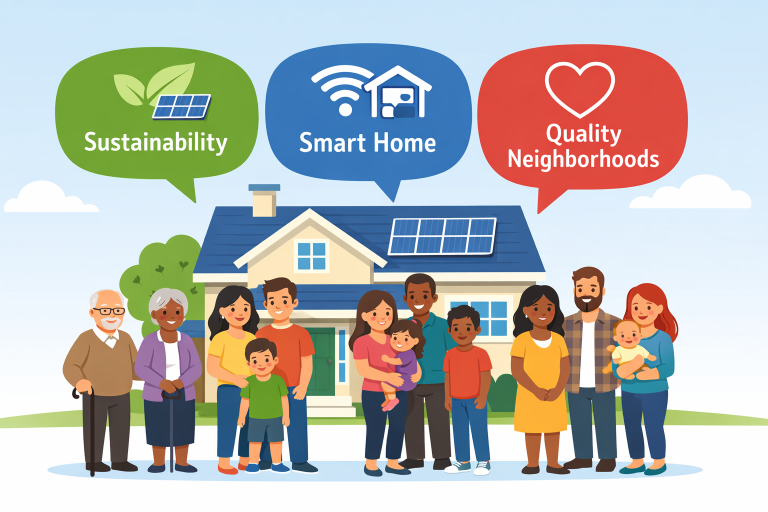
Today’s buyers are placing a premium on quality neighborhoods, proximity to family and friends, and affordability. Specifically:
- 45% prioritize quality neighborhoods.
- 34% value being close to family and friends.
- 30% focus on affordability.
While urban areas are gaining popularity, suburbs and small towns remain top choices, with the median move distance dropping to just 20 miles, a significant decline from 50 miles during the pandemic.
The appeal of proximity extends beyond family obligations. Many buyers want shorter commutes, access to reputable schools, and close-knit local communities. Suburbs and small towns often offer more space and better value for money, and many have developed vibrant town centers with lively amenities, restaurants, and recreational opportunities, making them attractive alternatives to city living.
Rise of Multigenerational Living
Economic pressures and shifting family dynamics are driving an increase in multigenerational living. In 2026, nearly 17% of home purchases involved properties intended for multiple generations. Families are pooling resources to accommodate aging parents or adult children returning home, seeking homes that can comfortably house larger or more diverse households. This shift has impacted what buyers look for in a home. Flexible layouts, separate living quarters, and larger lots are increasingly desirable. Homes with finished basements, guest suites, or additional kitchens provide the privacy and functionality that multi-generational families need. Cultural influences also play a role, as close-knit communities and extended family support are highly valued across many backgrounds, further driving this trend.
Emphasis on Sustainable and Smart Home Features
Buyers are increasingly seeking homes equipped with energy-efficient appliances, solar panels, and integrated smart security and automation systems. This trend reflects a growing environmental awareness and a desire for technological convenience. Many purchasers are keenly aware of the long-term savings associated with efficient systems, which complement their sustainability goals.
Smart homes are no longer just a luxury but are quickly becoming the standard. Features like programmable thermostats, energy-efficient lighting, water-saving fixtures, and advanced home security systems greatly enhance resale value and marketability. Younger buyers, especially, are drawn to homes that reflect their values and support a modern lifestyle. Eco-friendly landscaping, electric car charging stations, and the use of sustainable materials further shape purchasing decisions in 2026.
Challenges in the Homebuying Process
Despite these preferences, many buyers face challenges, including high home prices, elevated mortgage rates, and limited inventory. These factors have led to a drop in optimism, with only 21% of Americans believing now is a good time to buy a home. The shortage of available homes remains a key concern, leading to increased competition and, in some cases, bidding wars. Many buyers have had to compromise on their wish lists or expand their searches geographically to find suitable properties. Flexibility, patience, and creativity have become essential virtues for those navigating today’s real estate environment, with buyers often working closely with agents to identify opportunities as soon as they arise.
Expanding Buyer Demographics and Diverse Needs
A noteworthy aspect of the 2026 housing market is the increasing diversity among homebuyers. Alongside generational shifts, there has been a surge in single women purchasing homes independently, as well as a rise in purchases among ethnic minorities. These buyers may face unique hurdles, such as discrimination or limited access to conventional financing. Yet, their growing presence is leading agents to understand better and address a broader spectrum of needs and preferences. Specialized approaches, such as targeted first-time buyer programs and multilingual services, have become an integral part of many real estate offerings. These efforts help ensure equal access to housing opportunities and make the process more inclusive across all buyer segments. Meanwhile, the demand for accessibility in housing has become more prominent as aging in place and differently-abled family members influence purchasing decisions. Features such as step-free entrances, wider doorways, and accessible bathrooms are increasingly requested, motivating both builders and sellers to widen their appeal and accommodate a changing clientele.
Tech-Enabled Home Search Experiences
Technology continues to transform how homes are bought and sold. With increasing reliance on digital tours, drone footage, and interactive floor plans, today’s buyers can conduct in-depth research before ever setting foot inside a property. Virtual open houses and remote closings became necessities during the pandemic and have remained popular due to the convenience and transparency they offer. These digital solutions not only broaden the audience for listings but also streamline the decision-making process for buyers both near and far. Real estate agents have adapted by investing in high-quality digital marketing, social media engagement, and customized video walkthroughs. Artificial intelligence tools help identify homes that best meet clients’ preferences and notify them instantly as new properties become available. The rise in tech-savvy buyers means agents must continuously evolve their services to meet heightened expectations around communication, convenience, and access to information.
Looking Ahead: What Buyers and Sellers Should Expect
As the real estate market continues to shift, both buyers and sellers need to remain adaptable. Interest rates and inventory challenges will likely persist throughout 2026, making it essential for buyers to seek pre-approval, stay informed of changing mortgage programs, and remain open to compromises on their ideal home features. For sellers, timing, preparation, and strategic marketing will be key in attracting a diverse and discerning pool of buyers. Furthermore, there’s continued potential for evolution in response to economic conditions, government incentive programs, and social trends. With sustainability and smart technology at the forefront of many conversations, future homes are poised to become more efficient, more connected, and even more closely aligned with consumers’ everyday lifestyles and values. By staying attuned to these trends and working with professionals invested in their success, buyers and sellers alike can navigate this complex environment with greater clarity and confidence.
Conclusion
Understanding the evolving preferences and challenges of today’s homebuyers is essential for anyone involved in the real estate market. By staying informed about these trends, buyers can make choices that align with their needs and goals, while sellers can better position their properties to meet market demands. The market in 2026 is defined by adaptability, innovation, and a renewed focus on quality living. Whether you’re buying your first home, seeking a multi-generational property, or looking for greener, smarter features, awareness of these trends can empower you to make strategic, confident decisions. With the right guidance and preparation, navigating today’s housing market can lead to successful outcomes for all parties involved.