

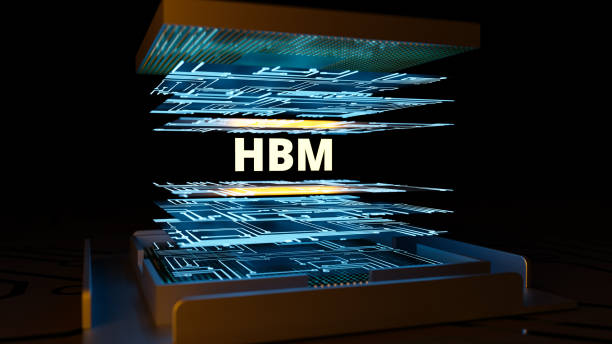
The rapid acceleration of artificial intelligence workloads has exposed a critical limitation in modern semiconductor design: the silicon memory wall. As compute capabilities scale faster than memory bandwidth, system architects must rethink integration strategies to sustain performance gains. High Bandwidth Memory 4 (HBM4) represents a transformative advancement, enabling unprecedented data throughput, reduced latency, and enhanced energy efficiency. However, successful implementation requires a highly coordinated approach spanning advanced packaging, signal integrity, and PCB board architecture.
This guide explores how organizations can strategically integrate HBM4 to unlock next-generation AI performance while maintaining reliability and scalability.
Understanding the Architectural Shift Required for HBM4 Integration
The transition to HBM4 demands a fundamental rethinking of memory architecture, where vertically stacked designs and high-density interconnects redefine how data is accessed, processed, and delivered across advanced AI systems.
- Transition from traditional memory hierarchies to stacked architectures: HBM4 introduces vertically stacked memory dies interconnected through through-silicon vias (TSVs), fundamentally changing how data flows within AI systems. This architectural shift requires designers to move beyond conventional planar layouts and adopt 3D integration techniques that prioritize bandwidth density and minimize interconnect distance.
- Alignment between compute engines and memory subsystems: Efficient HBM4 deployment depends on tight coupling between GPUs, accelerators, and memory stacks. The physical proximity enabled by advanced packaging technologies ensures lower latency, but it also demands careful co-design to balance thermal, electrical, and mechanical constraints.
- Redefinition of interconnect strategies for ultra-high bandwidth: Traditional interconnect approaches are insufficient for HBM4 speeds. Engineers must implement high-density interposers and advanced routing methodologies to sustain signal fidelity while supporting multi-terabit data rates across channels.
- Integration challenges across multi-die environments: HBM4 systems often involve heterogeneous integration, combining logic dies with memory stacks. This introduces complexities in synchronization, power delivery, and signal coordination, requiring robust design frameworks to ensure seamless operation.
Advanced Packaging and Thermal Management Considerations
As HBM4 pushes the limits of integration density, advanced packaging technologies and efficient thermal management strategies become critical to sustaining performance, reliability, and long-term system stability.
- Adoption of 2.5D and 3D packaging technologies: HBM4 relies heavily on silicon interposers and advanced packaging techniques such as chiplets and hybrid bonding. These approaches enable dense integration but also demand precision manufacturing and alignment to maintain performance integrity.
- Thermal dissipation in high-density memory stacks: The compact nature of HBM4 leads to increased thermal density, which can impact reliability and performance. Effective thermal solutions, including heat spreaders, advanced cooling systems, and material optimization, are essential to maintain operational stability.
- Material selection and mechanical reliability: Different materials used in interposers, substrates, and dies expand at varying rates under heat. Managing these mechanical stresses is critical to prevent warping, delamination, or long-term degradation in high-performance AI systems.
- Power delivery network optimization within compact footprints: HBM4 integration requires efficient power distribution across densely packed components. Engineers must design low-impedance power delivery networks that minimize voltage drops while supporting high current demands.
Signal Integrity and High-Speed Design Optimization
With HBM4 operating at ultra-high data rates, ensuring signal integrity through precise routing, controlled impedance, and robust validation techniques is essential for maintaining consistent and error-free performance.
- Managing signal loss and crosstalk at extreme data rates: HBM4 operates at significantly higher speeds than previous generations, making signal degradation a major concern. Careful impedance control, shielding techniques, and optimized trace geometries are necessary to preserve signal quality.
- Precision in routing strategies for dense interconnections: High-density routing environments demand meticulous planning to avoid interference and ensure consistent performance. This is where advanced PCB layout designing practices become critical, enabling optimized pathways for high-speed signals across complex substrates.
- Clock synchronization and timing accuracy: Maintaining precise timing across multiple memory channels is essential for HBM4 efficiency. Engineers must address clock skew, jitter, and synchronization challenges to ensure reliable data transfer across the system.
- Validation and simulation for high-speed environments: Comprehensive simulation tools are required to model signal behavior under real-world conditions. Pre-silicon validation helps identify potential bottlenecks and ensures that designs meet performance expectations before fabrication.
System-Level Co-Design for AI Workloads
Maximizing the benefits of HBM4 requires a holistic co-design approach, where hardware architecture and software optimization work together to deliver scalable and workload-specific AI performance.
- Holistic integration of hardware and software stacks: HBM4 integration is not limited to hardware alone. Software optimization, including memory access patterns and workload distribution, plays a vital role in maximizing bandwidth utilization and minimizing latency.
- Workload-specific memory optimization strategies: Different AI applications, such as training large language models or running inference workloads, have unique memory requirements. Tailoring HBM4 configurations to specific workloads ensures optimal performance and resource efficiency.
- Scalability considerations for future AI demands: As AI models continue to grow in complexity, systems must be designed with scalability in mind. Modular architectures and flexible integration strategies allow organizations to adapt to evolving requirements without significant redesign.
- Balancing performance, cost, and manufacturability: While HBM4 offers significant performance advantages, it also introduces higher costs and manufacturing complexity. Achieving the right balance between performance gains and economic feasibility is essential for widespread adoption.
Design Validation, Testing, and Reliability Assurance
Robust validation frameworks and reliability-focused testing methodologies are indispensable for ensuring that HBM4-integrated systems meet performance expectations while maintaining durability in demanding operational environments.
- Comprehensive testing across multiple integration layers: HBM4 systems require validation at the die, package, and system levels. Each layer introduces unique challenges, making it essential to implement rigorous testing methodologies to ensure reliability.
- Failure analysis and risk mitigation strategies: Identifying potential failure points early in the design process helps reduce costly redesigns. Advanced diagnostic tools and predictive analysis techniques enable engineers to address issues proactively.
- Lifecycle management and long-term reliability: AI systems deployed in data centers must operate continuously under demanding conditions. Ensuring long-term reliability requires robust design practices, including stress testing and durability assessments.
- Compliance with industry standards and benchmarks: Adhering to established standards ensures interoperability and performance consistency. Benchmarking against industry metrics helps validate design effectiveness and provides confidence in deployment readiness.
Conclusion
HBM4 integration represents a pivotal advancement in overcoming the AI silicon memory wall, enabling unprecedented bandwidth and efficiency for next-generation applications. Organizations that invest in these capabilities can unlock significant competitive advantages while ensuring scalability, reliability, and performance in increasingly complex AI environments powered by VLSI chips.
For those aiming to accelerate innovation in semiconductor design, Tessolve offers comprehensive expertise across advanced memory integration, high-speed design, and system validation. With a strong focus on delivering scalable and reliable solutions, Tessolve supports businesses in navigating the complexities of HBM4 adoption. Leverage cutting-edge engineering capabilities and drive success in next-generation AI hardware development.