

Selecting the right water heater impacts everything from daily comfort to the efficiency and cost of running your home. With so many options available, making the best choice can seem overwhelming. This comprehensive guide breaks down the key considerations so you can confidently navigate options for water heater installations in Ontario and beyond. Whether you are upgrading an old unit or building a new home, understanding what matters most will help you maximize performance, savings, and satisfaction with your hot water system.
Choosing wisely allows you to reduce utility bills, prolong the lifespan of your equipment, and minimize your home’s environmental impact. It is also important to match your unit to your household’s unique needs. By learning about the advantages and drawbacks of different systems, as well as sizing, fuel source, and available incentives, you can ensure reliable hot water whenever and wherever you need it most. Evaluate the installation requirements and consider future household growth or changes to make the best long-term investment possible.
Menu list
Types of Water Heaters
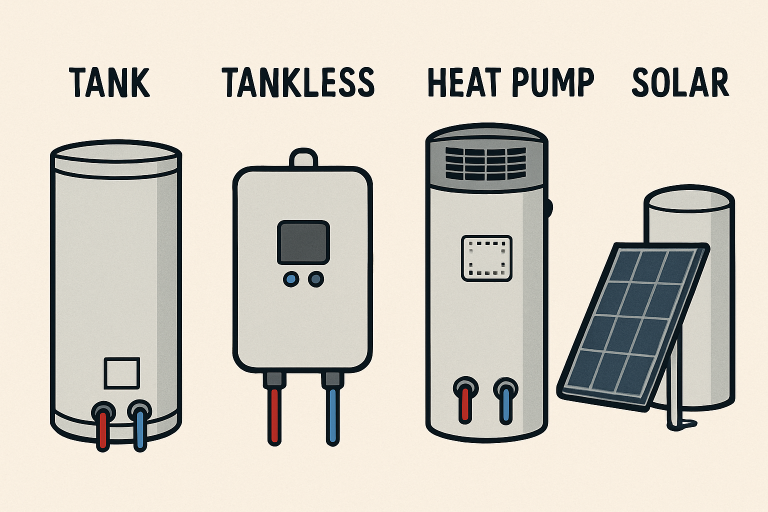
Before you invest in a new unit, it is essential to know the major types of water heaters available for residential use:
- Conventional Storage Water Heaters: These are the most common and feature a tank that stores hot water. While convenient, they can lead to energy waste due to standby heat loss when the stored water cools and must be reheated.
- Tankless (On-Demand) Water Heaters: Compact and highly efficient, these units heat water only when needed. This approach can save energy and reduce monthly bills.
- Heat Pump Water Heaters: Using electricity to move heat rather than generate it directly, these models are significantly more efficient than standard electric heaters.
- Solar Water Heaters: These systems use solar panels to capture and transfer energy, offering substantial savings for homes with ample sun exposure but higher upfront installation costs.
- Tankless Coil and Indirect Water Heaters: Integrated with your home’s heating system, these can be a smart option if you already have a high-efficiency boiler installed.
Factors to Consider When Choosing a Water Heater
Your household size and hot water usage habits are primary considerations. If you have a large family or high water demand, a traditional tank or a larger-capacity tankless unit might be necessary. Smaller households or those with lower water usage might benefit from the compactness and efficiency of a tankless water heater.
Fuel availability and cost are crucial factors. Electricity, natural gas, propane, and solar energy each have different price points and regional accessibility. Natural gas appliances typically have lower operating costs but may not be viable in all locations.
Energy efficiency ratings, especially the Energy Factor (EF) or Uniform Energy Factor (UEF), should inform your choice. Investing in ENERGY STAR® certified models can reduce energy use and operating expenses over the unit’s lifetime.
Budget is another important factor. While tankless and heat pump heaters require a higher initial investment, they regularly pay off through energy savings. Consider both short-term and long-term financial impacts.
Energy Efficiency and Operating Costs
Improving energy efficiency pays off in multiple ways, including lower monthly bills and reduced carbon footprint. For example, heat pump water heaters can use up to 60 percent less electricity than conventional models, leading to significant annual savings.
Fuel choice also makes a major difference. For homes with natural gas, gas water heaters tend to cost less to operate. Solar water heaters offer the benefit of near-zero energy costs after installation, but payback periods depend on local incentives and sunlight levels. For more on the relationship between efficiency and costs, see this Consumer Reports resource.
Installation and Space Requirements
Installation considerations affect both the upfront cost and your satisfaction with the system. Tankless heaters, for example, are wall-mounted and require less space, making them perfect for small homes or condos. However, they may need upgraded gas lines or electrical systems. Heat pump water heaters need more space for air circulation and often benefit from installation in basements with steady temperatures.
Poor installation can decrease efficiency, shorten lifespan, and even create safety hazards. Always consult a licensed and experienced plumber or HVAC technician for recommendations and installation to ensure safety, compliance, and optimal performance.
Tax Credits and Incentives
Replacing your old water heater with a more efficient model may qualify you for valuable rebates and tax incentives. For instance, federal tax credits of up to $2,000 are available through 2025 for qualifying heat pump water heaters. These credits cover 30 percent of the installed cost and incentivize homeowners to make energy-efficient upgrades. Additional utility rebates and provincial incentives may apply in some regions, so it’s wise to investigate local programs when planning an upgrade.
Conclusion
Making the best choice for a water heater requires weighing your hot water needs, energy-efficiency goals, operating budget, installation requirements, and available incentives. By understanding the options and planning strategically, you ensure long-term comfort, savings, and peace of mind for your household. Remember to consult experts and take advantage of funding opportunities to optimize your investment in home comfort and efficiency.